Contents
Scroll to:
EDN: OBDLZH
Scroll to:
In the context of the accelerating digital transformation of the manufacturing sector of the Russian economy, a methodological gap persists in understanding the impact of digitalization on the performance efficiency of enterprises and business ecosystems. The purpose of this study is to develop a methodological framework for the integrated assessment of digitalization efficiency (the diffusion and application of digital technologies) within the core of an industrial ecosystem by accounting for the combined economic, operational, technical, social, and market effects. The methodological foundation of the research is based on the principles of the systems and process approaches, the concepts of enterprise digital maturity and managed business ecosystems, as well as the principles of lean production and digital management. The methodological framework includes a quantitative tool developed by the authors – an integral digitalization efficiency index (IIE), constructed using the Analytic Hierarchy Process (AHP), multi-criteria decision analysis (MCDA), normalization procedures, and weighted additive aggregation. The empirical basis of the study is represented by a case study of a B2B engineering (machine-building) enterprise. The results demonstrate a stable growth of the integral index, indicating a systemic effect of digitalization and the company’s transition from localized improvements to a mature phase of a digital ecosystem. In future research, the integrated approach may be further developed toward greater accuracy and practical applicability, enabling the transformation of the index from an analytical indicator into a sustainable managerial decision-making tool under conditions of a changing external environment. At the same time, a key limitation of the methodology is identified: the growth of the integral digitalization index should be interpreted as the result of a comprehensive transformation of enterprise activities, within which digitalization represents a significant, but not the sole, factor influencing the observed effects.
Popov E.V., Simonova V.L., Zyrianov A.S. Integral index of digitalization efficiency in the system of analyzing business ecosystem development. Economics of Science. 2026;12(1):86-105. EDN: OBDLZH
Introduction
In the past decade, digitalization has garnered increasing attention from both academic and professional communities regarding its impact on business operations. A particular area of interest is the effect of digitalization on the performance outcomes of core functions and the overall business ecosystem, as contemporary organizations must assess changes in efficiency based on key performance indicators to adapt and fine-tune their business models (Verhoef et al., 2021, p. 895). However, there remains a lack of consensus in the scientific and professional literature concerning the composition of indicators, the interpretation of effects, and the effectiveness of digitalization. The management system of a digitalizing B2B enterprise takes on the characteristics of a socio-technical adaptive system, where, alongside resources, data, knowledge, and digital services are managed to ensure the sustainability of outcomes in the face of high uncertainty in the external environment.
In this article, the term "digitalization" is defined as a process that encourages enterprises to adapt and enhance their digital capabilities across all dimensions in order to survive and thrive. It enables companies to navigate uncertainties and respond effectively to business demands (Deepu & Ravi, 2021). Digitalization involves not merely the implementation of technologies, but rather fundamental changes that affect the organization’s strategy, business processes, organizational knowledge, and the entire socio-technical system (Park & Saraf, 2016). As both internal and external elements of the organization, along with their interrelations, are transformed through digital technologies, this can directly or indirectly impact the company’s performance outcomes (Meng & Wang, 2020).
The concept of the "core of the business ecosystem" should be understood as a focal entity that performs a system-forming function by concentrating key resources, digital platforms, and management competencies. This entity facilitates the formation, coordination, and sustainable reproduction of network interactions among ecosystem participants, aimed at the joint creation and distribution of value. Simultaneously, the business ecosystem is defined as a collection of stable network interactions between the core and its counterparties and partners (suppliers, consumers, service and technology providers, support institutions, and regulators), who collaboratively engage in the creation and distribution of value.
The empirical analysis is confined to the core of the ecosystem, as the integral assessment is based on indicators that are available for regular measurement within the enterprise; the influence of the periphery is considered at the level of interpreting the results. Although the impact of digitalization on performance indicators is garnering increasing interest from both researchers and practitioners, it remains unclear what specifically should be measured and how to determine the effects of digitalization on performance (Rungi, 2019). In this context, the following research questions were formulated within the framework of the study:
Digitalization or digital transformation necessitates that leaders articulate a digital vision that clarifies the necessity, plan, and anticipated outcomes of digitalization. Consequently, the challenges faced by managers are linked to the uncertainties, risks, and imbalances in the impact of digitalization on the architectural elements of the organization and their performance, due to the socio-technical nature of digitalization (Abramov et al., 2024; Vasilieva, 2023).
Since digitalization strategies and other organizational components are interdependent, digitalization itself cannot fully elucidate the complex mechanisms influencing organizational effectiveness. There are studies (for instance, Hanelt et al., 2017; Sener & Yuksel, 2017; Nandkumar et al., 2018; Cubric, 2020; Alhassan & Adam, 2021; Kalenov, 2023) that examine digital effectiveness from various perspectives. However, a consolidated systemic view of digitalization effectiveness utilizing an appropriate theoretical framework is lacking.
For instance, literature examines the impact of digital solutions on the transformation of a company's sustainable development (Hanelt et al., 2017), market value (Nandkumar et al., 2018), process metrics (Sener & Yuksel, 2017), financial performance (Westerman et al., 2014; Sia et al., 2016), productivity (Brynjolfsson et al., 2011), as well as investments in digitalization (Hess et al., 2016).
The objective of this study is to develop and test a methodological framework for the integral assessment of the effectiveness of digitalization in B2B segment industrial enterprises. This framework aims to establish and interpret the relationship between the advancement of digital technologies and the changes in the enterprise's performance results through a combination of economic, operational, technical, social, and market effects.
To achieve this goal, the following tasks were formulated:
It is also important to note that within the scope of this research, the effects of digitalization refer to the observable changes in specific performance indicators of an enterprise (economic, operational, technical, social, and market) associated with the implementation and use of digital technologies. The effectiveness of digitalization is interpreted in a practical sense as a comprehensive assessment of the aggregate of these effects, consolidated into a time-comparable metric and not reducible to the classical "result-cost" relationship.
Research Methodology
The subject of this research is the management system for the process of digitalization development within the core of an industrial business ecosystem, exemplified by a B2B segment machine engineering enterprise. The enterprise is viewed as a focal entity that shapes and coordinates network interactions with key participants in the external environment (clients, suppliers, technology providers, and others). In this context, the integral assessment of digitalization effectiveness is based on indicators measured at the core level, which is determined by the availability of comparable data from 2022 to 2024 and the objective of creating an applied management tool for the enterprise's digitalization. The digital transformation is carried out based on a Digitalization Strategy developed in accordance with an original methodological approach, which is elaborately presented in the work "Formation of a Digitalization Strategy for the Business Ecosystem of an Industrial Enterprise" (Popov et al., 2025a).
To assess the effectiveness and verify the applied digitalization methodology through the lens of economic, operational, technical, social, and market effects, an original methodological approach has been utilized to form an integral index of digitalization efficiency (IIE), the conceptual foundations of which were established in the work (Popov et al., 2025b). The quantitative implementation and testing of the methodology are presented in this study. Its overall formula is represented as shown in formula (1). All dependencies and calculation formulas ((1), (4), (8), (10), (13), (15), (18)), which are presented subsequently, have been developed by the authors within the framework of this research. In their construction, general principles of multi-criteria analysis, normalization of indicators, and the analytic hierarchy process (AHP), which are widely used in economic research, have been employed; however, the specific structure of the index, the composition of components, and the set of indicators are original in nature.

where Xk represents the normalized value of the k-th component of the digitalization effect, Xk ∈ (0;1); k = 1, 2, …, K, with K being the total number of components of the digitalization effects; w denotes the weight of the k-th component, reflecting its relative significance, determined by the Analytic Hierarchy Process (AHP) method, while 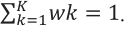
In the context of this research, five broad groups are considered as components of the effects of digitalization (Xk): economic (E), operational (O), technical (T), social (S), and market (CP) effects. The values of these components are formed based on the normalization of the corresponding specific indicators that characterize the changes in the performance results of the enterprise under the influence of digitalization.
In the context of this research, five broad categories of digitalization effects (Xk) are examined: economic (E), operational (O), technical (T), social (S), and market (CP) effects. The values of these components are derived from the normalization of the relevant specific indicators that reflect the changes in the performance results of the enterprise due to digitalization.
The weights of the components (wk) are determined using the Analytic Hierarchy Process (AHP) method, based on expert surveys conducted with representatives from top and middle management of the enterprise, who are directly involved in the implementation and evaluation of digital initiatives (general management, finance, production). This method relies on a pairwise comparison procedure of the criteria, followed by the calculation of their weights based on the eigenvalues of the preference matrix. The application of AHP enables the formalization of expert judgments regarding the significance of various digitalization effects and yields quantitative weight coefficients that are utilized in aggregating indicators into a composite index.
In the context of this research, five broad categories of digitalization effects (Xk) are examined: economic (E), operational (O), technical (T), social (S), and market (CP) effects. The values of these components are derived from the normalization of the relevant specific indicators that reflect the changes in the performance results of the enterprise due to digitalization.
The weights of the components (wk) are determined using the Analytic Hierarchy Process (AHP) method, based on expert surveys conducted with representatives from top and middle management of the enterprise, who are directly involved in the implementation and evaluation of digital initiatives (general management, finance, production). This method relies on a pairwise comparison procedure of the criteria, followed by the calculation of their weights based on the eigenvalues of the preference matrix. The application of AHP enables the formalization of expert judgments regarding the significance of various digitalization effects and yields quantitative weight coefficients that are utilized in aggregating indicators into a composite index.
To establish the empirical foundation of the research, both qualitative and quantitative data collection methods were employed. The qualitative data, which includes assessments of the weights of components, was obtained through in-depth interviews and surveys of specialists involved in the development and implementation of the digitalization strategy, as well as representatives from top management and line management. The quantitative data was gathered from open sources and the specialized information system Kontur.Focus, in addition to being directly provided from the internal accounting databases of the enterprise. Data processing involved normalization and scaling of indicators, multi-criteria assessment methods (MCDA) and AHP, weighted additive aggregation, dynamic and component analysis, as well as decomposition of growth (waterfall). The informational basis of the research consisted of foreign scientific articles and reviews, along with publications indexed in the Russian Science Citation Index (RSCI).
Below is a detailed description of the methodology for calculating the integral index of digitalization, developed by the authors and applied within the framework of this research. Given that the calculations were conducted over the periods of digitalization, specifically for the years 2022, 2023, and 2024, it is methodologically suboptimal to calculate normalized values of the indicators of the components of the digitalization effect using the min-max normalization method (Zavadskas et al., 2014). This is because the extreme years will almost certainly yield boundary values of 0 and 1, which will artificially inflate the dynamics of 2023, while the scale will change with the addition of a new period. Therefore, the methodology employs centering based on a threshold of significant changes (Steele et al., 2009), as seen in formulas (2) and (3), where we consider the change relative to 2022 and linearly calibrate it so that deviations at the level of ± θ% yield (0, 1) with a baseline value of the digitalization effects in 2022 set at 0.5:
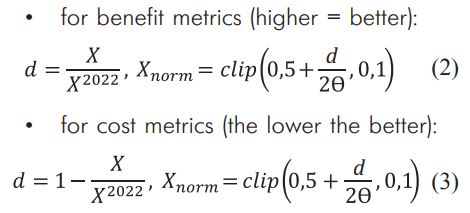
where θ represents a significant change that we consider to be 0.3.
On one hand, the selection of θ is subjective; however, on the other hand, it is a controllable parameter that can be defined based on the criticality of the effect.
The classification of metrics utilized for calculating the components of digitalization effects is presented in Table 1.
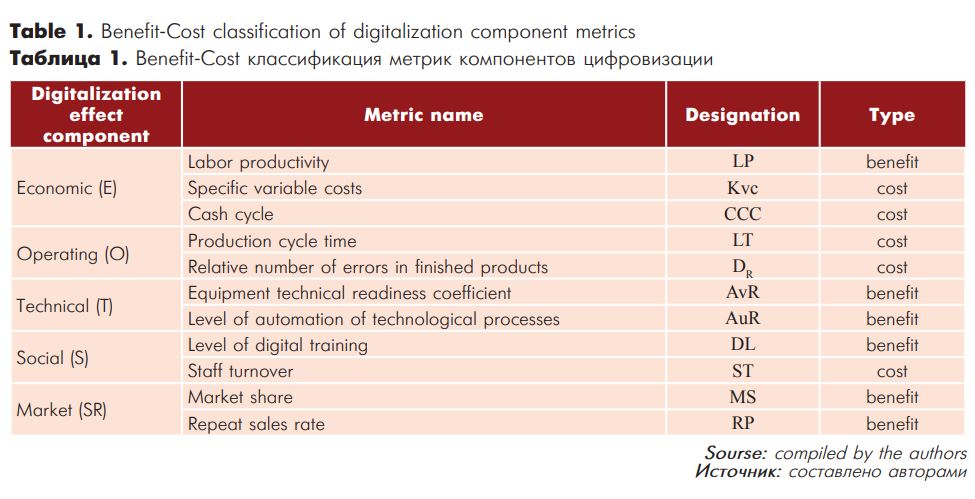
In this methodology, all components of the integral index of digitalization efficiency are calculated as normalized aggregated indicators, which reflect changes in specific aspects of enterprise activity under the influence of digitalization.
The indicators that comprise each component may possess various economic natures (levels, shares, time intervals, etc.); however, after normalization, they are converted to a dimensionless scale (0;1), ensuring their comparability.
The aggregation of indicators within each component is performed in the form of a weighted sum and does not imply the interpretation of the resulting value as an additive economic quantity. The values of the components reflect the direction and intensity of changes in the corresponding effects of digitalization and are used for comparative analysis of the dynamics, structure, and contribution of individual aspects to the integral assessment of digitalization efficiency.
The economic component of the digitalization effect (E)
The formula for calculating the economic effect (4):

where LPnorm (Labor Productivity) represents the normalized value of labor productivity per employee; this metric reflects savings achieved through automation, reduction of manual labor, and enhancement of personnel efficiency. wLP, wKvc, wCCC are the weights of the indicators, indicating their relative importance.
The calculation of labor productivity over a period is performed using formula (5):

where Q represents the volume of produced goods (in monetary terms),
T denotes labor costs (average number of employees).
Kvcnorm (unit variable cost) refers to the normalized value of unit variable costs (in monetary terms), achieved through reducing defects, optimizing purchases, and automated planning.
The calculation of unit variable costs in monetary terms for the period is performed using formula (6):
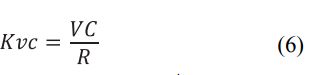
where VC represents variable costs (in monetary terms),
R denotes output or revenue (in monetary terms).
CCCnorm (Cash Conversion Cycle) refers to the normalized duration in which funds invested in the production and sales cycle are returned as receipts from customers. Digitalization directly impacts the CCC through:
– ERP / MES / SCM systems that reduce inventory and expedite procurement,
– CRM / electronic document management / online payments that accelerate customer payments,
– E-procurement / integration with suppliers that enable efficient payment management.
As a result, digitalization reduces the CCC, which can be interpreted directly as an economic effect (acceleration of capital turnover).
The formula for calculating CCC (7):

where Dz represents the inventory turnover period,
Ddeb denotes the accounts receivable turnover period,
Dcred signifies the accounts payable turnover period.
The operational component of the digitalization effect (O)
The formula for calculating the operational effect (8):

where LTnorm (Lead Time) represents the normalized value of the production cycle / average (median) during the order fulfillment period, meaning the total time from the moment the order is received until it is shipped; it is one of the most sensitive operational indicators to digitalization, particularly with the implementation of MES, ERP, APS, and end-to-end document flow.
DRnorm (Defects Relative) denotes the normalized value of the relative number of errors, failures, and downtimes, calculated using formula (9):
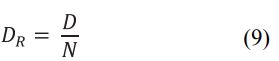
where D represents the number of products with hidden defects found by the customer,
N denotes the total number of products manufactured. The technical component of the digitalization effect (T)
The formula for calculating the technical effect (10):

where AvRnorm represents the normalized value of the equipment readiness coefficient (KГТ / Availability Rate), which indicates the proportion of time during which the equipment is available to perform production tasks without downtime. In this study, this indicator is utilized to reflect changes in equipment readiness that may be associated with the implementation of digital solutions in the areas of condition monitoring and maintenance.
This coefficient is calculated using formula (11):

where T(of work) represents the time during which the equipment is in a functional state and capable of performing its duties, T (downtime) refers to the total duration of forced downtimes (repairs, maintenance).
AuRnorm (Automation Rate) is a normalized value of the automation level of technological processes, indicating the proportion of operations and areas executed in an automated mode. This metric reflects changes in the degree of automation of production processes, which may be associated with the implementation of digital solutions and the development of the enterprise's information technology architecture. Practically, an increase in the level of automation may be linked to the introduction and integration of systems such as MES, SCADA, ERP, PLM, and other digital solutions that facilitate automated management and coordination of technological processes.
The indicator is calculated using formula (12):
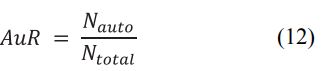
where Nauto represents the number of technological operations (or IT processes) executed automatically (by robots or using automated control systems, ERP, etc.),
Ntotal denotes the total number of operations within the production or business system.
The social component of the digitalization effect (S)
The formula for calculating the social effect (13):

where DLnorm (Digital Learning) represents the normalized value of the level of digital literacy, illustrating the platform's impact on enhancing the digital competence of participants. It indicates the proportion of users who have undergone training or certification in utilizing the platform or digital technologies due to its implementation. This metric emphasizes the platform's contribution to the development of skills and is crucial for the company's social objectives related to improving education in the realm of digitalization. If the platform necessitates user training for effective utilization, this metric becomes significant for assessing its social relevance.
STnorm (Staff Turnover) is the normalized value of employee turnover, reflecting the effect of digitalization on the quality of working conditions: reduction of routine tasks, increased transparency, convenience of the IT environment, as well as its influence on employee motivation and engagement.
The formula for calculating the level of digital literacy (14):
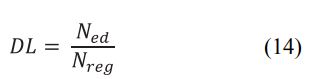
where Ned represents the number of trained participants,
Nreg denotes the total (registered) number of participants, and the average number of individuals in enterprises can be used as a basis.
The market component of the digitalization effect (CP)
The formula for calculating the market effect (15):

where MSnorm (Market Share) represents the normalized value of the market share of the core business ecosystem.
The calculation formula (16):

where Scomp represents the company's sales (Sales of the company), and Smarket denotes the total sales volume in the market (Total market sales).
RP (Repeat Purchase) is the normalized value of repeat sales over a specified period. This metric reflects the level of customer loyalty, the effectiveness of marketing strategies, and the management of existing clients. Furthermore, digital technologies significantly enhance the capabilities for customer retention, personalization, and service improvement.
It is calculated using formula (17):
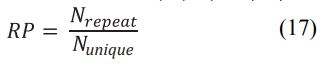
where Nrepeat represents the number of unique customers who have made more than one purchase during the selected period (Number of repeat customers),
Nunique denotes the total number of unique customers within the same timeframe (Total unique number of customers).

Formula (18) represents a specification of the general model of the integral index of digitalization efficiency (1) for a selected set of effect components and their corresponding weights.
Research Findings
The rapid digitalization of industries has led to the proliferation of complex industrial digital platforms and attempts to establish various digital business ecosystems. However, only a few leaders in industrial platforms have successfully developed sustainable business models around their offerings (Björkdahl, 2020). This may be attributed to the logic of value proposition formation during the initial stages of ecosystem development. Unlike the B2C market, in the B2B sector, it is more logical and effective to begin the formation of a digital business ecosystem with the digitalization of internal production processes and, more importantly, with the digitalization of the products being produced. Such a level of digitalization is typically internal to the company, thus having limited capabilities at the initial stage. These solutions are often structured as internally connected systems that monitor the activities of machines and systems, providing basic digital services such as spare parts monitoring, maintenance intervals, and other similar functions (Jovanovic et al., 2021).
Digital ecosystems at the foundational level connect virtual and physical objects regardless of their location, facilitating remote management through network infrastructures (Rymaszewska et al., 2017). By utilizing the properties of objects integrated with wireless technologies (such as sensors, microprocessors, activity trackers, and connected devices), product ecosystems like "Thingworx," "Mindsphereo," or "SAP Leonardo" generate and exchange data that provide a new dimension for strategy developers and open up opportunities for the creation of new services (Berente et al., 2021).
Based on scientific publications regarding the digitalization of ecosystems (Madanaguli et al, 2023; Kovalev et al., 2025; Nigai, 2023), this study categorizes digital business ecosystems into four types:
1) Platforms aimed at enhancing the efficiency of industrial products (product ecosystems, supply chain ecosystems);
2) Industrial marketplaces – platforms for industrial transactions;
3) Digital service ecosystems;
4) Multilateral digital business ecosystems (Popov et al., 2024).
According to this logic, the company under investigation ("ENSONS" – a manufacturer of transformer-reactor equipment) is at the initial stage of digital evolution, specifically in the transition from a traditional model to a digital product ecosystem. The company's digitalization strategy for 2022–2024 was developed in accordance with the author's methodology (Popov et al., 2025a).
During 2022–2024, the enterprise implemented a phased digitalization process, which included the establishment of a unified digital framework (ERP/PLM/CRM and corporate services), automation of key management and production processes (including planning and dispatching), the launch of production data monitoring elements (IoT as a step towards a digital twin), as well as the development of digital competencies among staff through training and internal communications. The monitoring of strategy implementation was conducted through the integration of ERP and analytical tools (BI), which facilitated regular assessments of KPI dynamics and adjustments to the priorities of digital initiatives. In the future, the introduction of intelligent forecasting and scenario modeling tools is planned, which will enable a transition to adaptive management principles and enhance the overall flexibility of the strategic planning system.
The description of the digitalization strategy of "ENSONS" over the years and its position in the typology of business ecosystems is crucial for interpreting the results of the digitalization effectiveness index calculation. The data for the index calculation based on the methodology presented above is shown below.
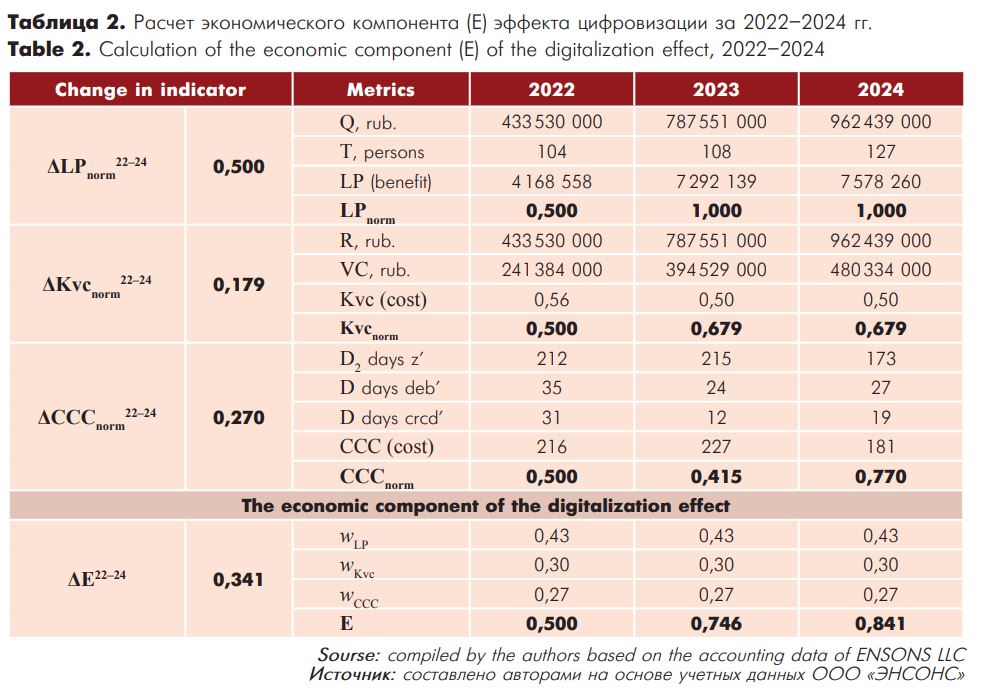
Calculation of the economic component of the digitalization effect (E)
The weights of the component indicators have been established in accordance with the methodology described in the section "Research Methodology," and are as follows:
wLP = 0.43, wKvc = 0.30, wCCC = 0.27.
Table 2 presents the initial values of the metrics, relative changes, and normalized values; it reflects the economic effects by year for each component, taking into account the weight characteristics. The calculations indicate that the values of the economic effect demonstrate a steady growth over two consecutive years. The surge in 2023 was driven by LP and Kvc, while in 2024, the primary impetus was provided by CCC (acceleration of cash turnover), as revenue/output had already plateaued, and the effect began to flow into working capital.
Calculation of the operational component of the digitalization effect (O)
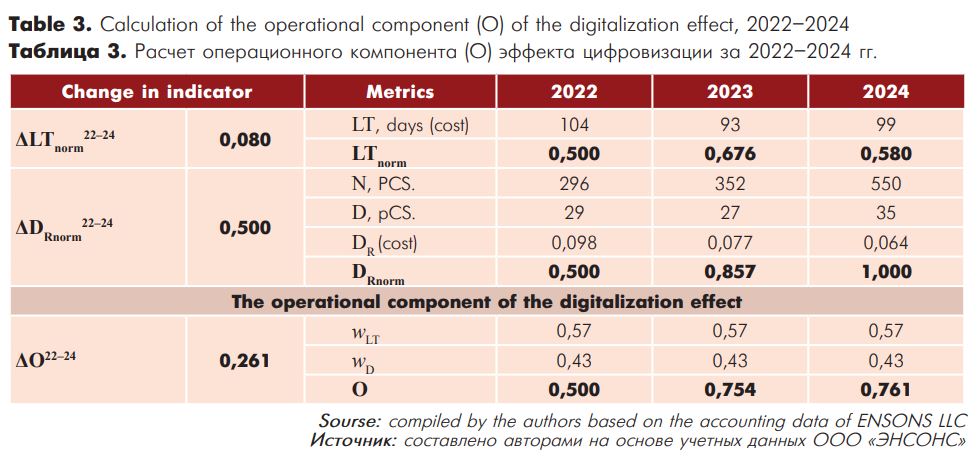
The weights of the component indicators have been adopted in accordance with the methodology described in the section "Research Methodology," and are as follows:
wLT = 0.57, wD = 0.43.
Table 3 presents the initial values of the operational effect metrics, relative changes, and normalized values; it reflects the operational effects by year for each component, taking into account the weight characteristics.
From the data in Table 3, it is evident that the operational effect demonstrates significant growth in 2023 and a slight increase in 2024. The primary driver is DR (reduction in defect rates), while LT has somewhat decreased its contribution in 2024 (the "saturation effect" following initial improvements), quality has stabilized, and further growth in the index requires additional efforts – targeted optimization of process durations is necessary (identifying bottlenecks, dispatching).
Calculation of the technical component of the digitalization effect (T)
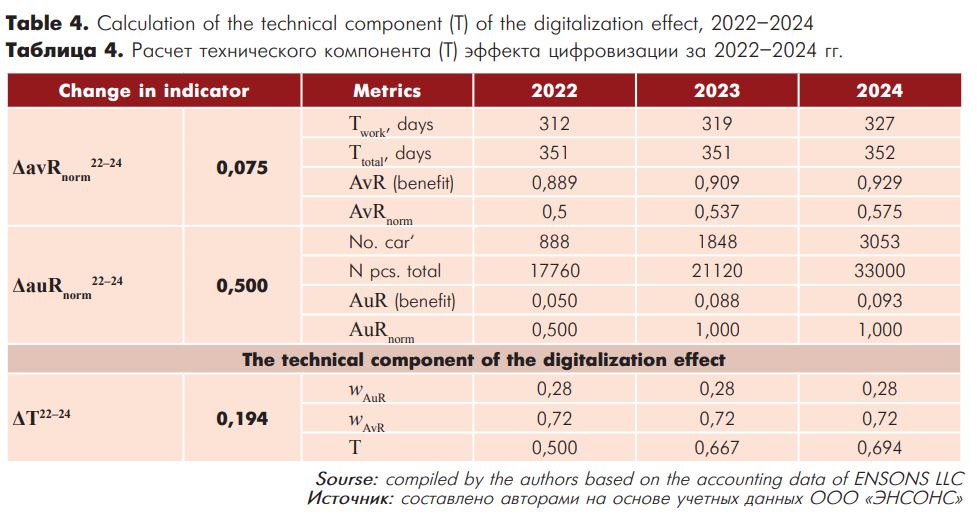
The weights of the component indicators have been adopted in accordance with the methodology described in the section "Research Methodology," and are as follows: wAuR = 0.28, wAvR = 0.72. Table 4 presents the initial values of the metrics for the technical effect of digitalization, relative changes, and normalized values; it reflects the technical effects by components based on subcomponent weights. The data in Table 4 indicate a steady growth of the technical component without abrupt fluctuations. The primary contribution comes from AuR (automation share), while AvR increases gradually. After the hardware and software have been installed, the next step is to expand coverage and enhance fault tolerance (availability).
Calculation of the social component of the digitalization effect (S)
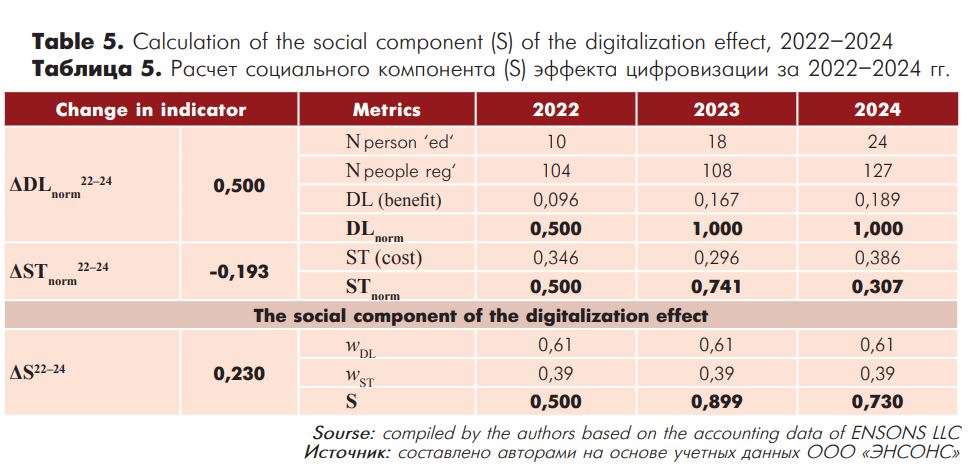
The weights of the component indicators have been established in accordance with the methodology described in the section "Research Methodology," and are as follows:
wDL = 0.61, wST = 0.39.
Table 5 presents the initial values of the metrics for the social component of digitalization, relative changes, and normalized values; it reflects the social effects by components based on subcomponent weights.
From Table 5, it is evident that in 2023 there was a significant increase in the social component due to DL (learning), but in 2024, a serious issue arose concerning ST (staff turnover), which diminishes the value of the component. The lack of supportive regulations in training, as well as a motivational strategy, leads to the "leakage" of the social component of the effect.
Calculation of the component of the digitalization effect on the changes in the competitive state of the core business ecosystem (CP)
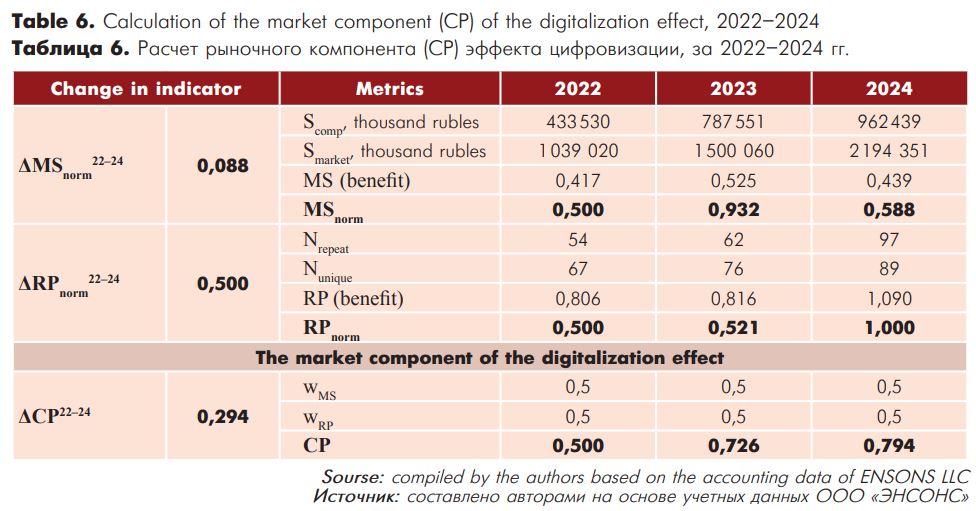
The weights of the component indicators have been accepted in accordance with the methodology described in the section "Research Methodology," and are as follows: wMS = 0.5, wRP = 0.5.
Table 6 presents the initial values of the metrics for the market effects of digitalization, the relative changes, and the normalized values; it reflects the market effects by components based on subcomponent weights. The component is growing normally here. The primary driver has shifted from MS (market share) in 2023 to RP (repeat purchases) in 2024. Digital processes have solidified customer returns; while market share does not need to grow continuously, it is crucial to maintain the framework of repeat sales.
Calculation of the weights of the components of the digitalization effect
The calculation of the weights of the components of the integral index of digitalization (wE, wO, wT, wS, wCP) was conducted based on data from an expert survey of top and middle management within the core of the business ecosystem. The average normalized values of the matrix of comparative analysis of the components are presented in Table 7.
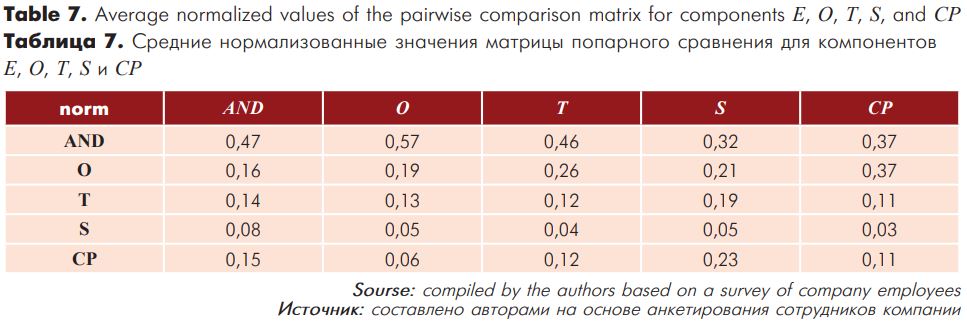
According to the calculations, the weights of the components were determined as follows: wE = 0.44; wO = 0.24; wT = 0.14; wS = 0.05; wCP = 0.13.
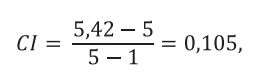
To verify consistency, we utilize the consistency index of the results, which is calculated using formula (19):

where λmax – the maximum eigenvalue of the matrix, for the given matrix is equal to 5.42;
n – the size of the matrix (number of criteria), is equal to 5.
Next, according to the hierarchy analysis method, it is necessary to calculate the CR (Consistency Ratio), which is an indicator used to assess the consistency of expert judgments when constructing pairwise comparison matrices. The CR allows for the determination of how logical and coherent the evaluations entered into the matrix are, in comparison to random (inconsistent) filling, and is calculated using formula (20):
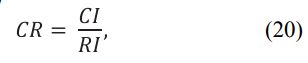
where RI represents the tabulated value of the random consistency index (for n = 5, RI = 1.12), then
Since CR < 0.1, the matrix is considered consistent, and the values for the criteria comparisons by the experts are transitive. The economic effect (E = 0.44) holds the highest weight, reflecting the company's experts' focus on the financial effectiveness of digitalization. The operational effect (O = 0.24) is the second most significant, emphasizing the importance of process optimization. The technical effect (T = 0.14) and competitive offering (CP = 0.13) occupy intermediate positions, while the social effect (S = 0.05) is regarded as the least significant, indicating the secondary nature of the social aspect in the perception of digitalization within the company (Figure 1).
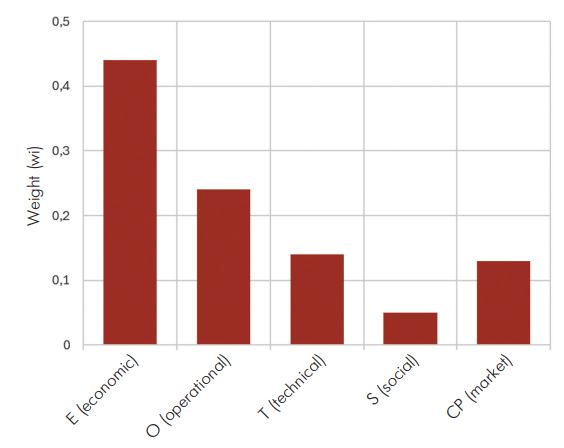
Figure 1. Histogram of the weight distribution of the components of the Integral digitalization efficiency index
Рисунок 1. Гистограмма распределения весов компонентов интегрального индекса эффективности цифровизации
Sourse: сompiled by the authors
Источник: составлено авторами
Calculation of the Integral Efficiency Index of Digitalization (IIE):
The results of the calculation of the Integral Efficiency Index of Digitalization are presented in Table 8.
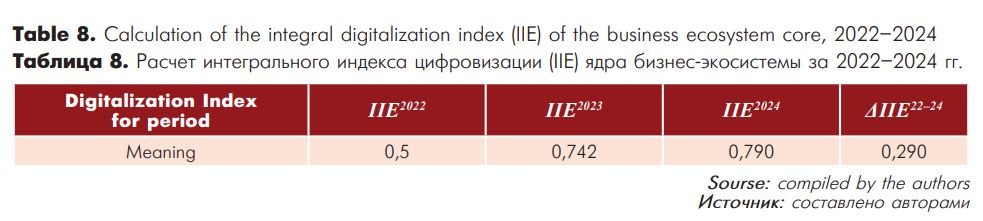
From the data on the dynamics of the integral index of digitalization efficiency (Table 8), it can be concluded that during the implementation of the digitalization methodology, the company achieved the following IIE values:
– in 2023, IIE = 0.742, indicating a growth of +0.242 points (+48.36% compared to the 2022 base),
– in 2024, IIE = 0.790, indicating a growth of +0.290 points (+57.94% compared to the base) and +0.048 points compared to 2023.
The visualization of the results is shown in Figure 2.
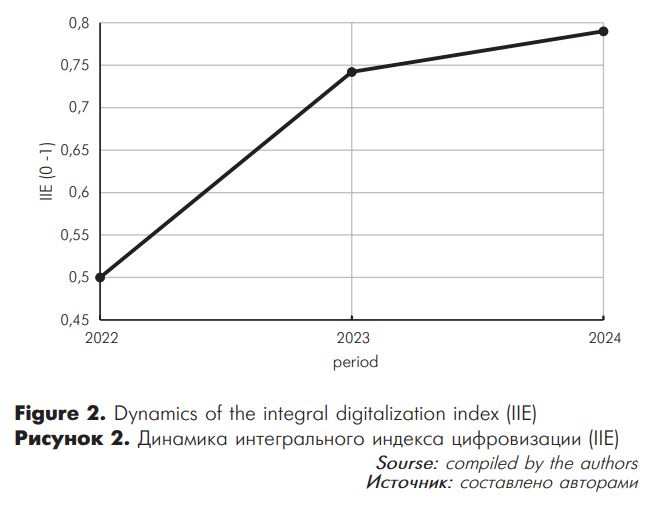
The results of the implementation of digital technologies during the examined periods can be characterized on a conditional maturity scale as follows:
– 2022: 0.50 – transitional stage (initial base);
– 2023: 0.74 – stable positive impact, approaching the 'mature phase';
– 2024: 0.79 – strengthening of maturity, with potential for further growth preserved.
The overall conclusion is that the impact of digitalization has proven to be consistently positive. By 2023, the integral index confidently exceeded the maturity threshold of 0.60, and in 2024, it solidified improvements at around 0.79. This corresponds to a transition from local effects to systemic ones. It is also important to note the growth dynamics: from 2022 to 2023, it amounted to +0.242, while from 2023 to 2024, it was already +0.048.
This indicates that the majority of the growth was achieved in 2023, primarily due to the implementation and launch of key digital practices. In 2024, growth continued but at a slower pace, which is a relatively typical pattern following the realization of the initial effects of digitalization.
From the contribution effect tables (Tables 2–6), the following can be observed:
– The economic component (E) and the market/client component (CP) significantly increased their contributions in 2024;
– The operational component (O) improved and stabilized;
– The technical component (T) is growing gradually;
– The social component (S) decreased compared to 2023 due to a specific situation in the labor market, which partially slowed the overall growth rate of the index in 2024.
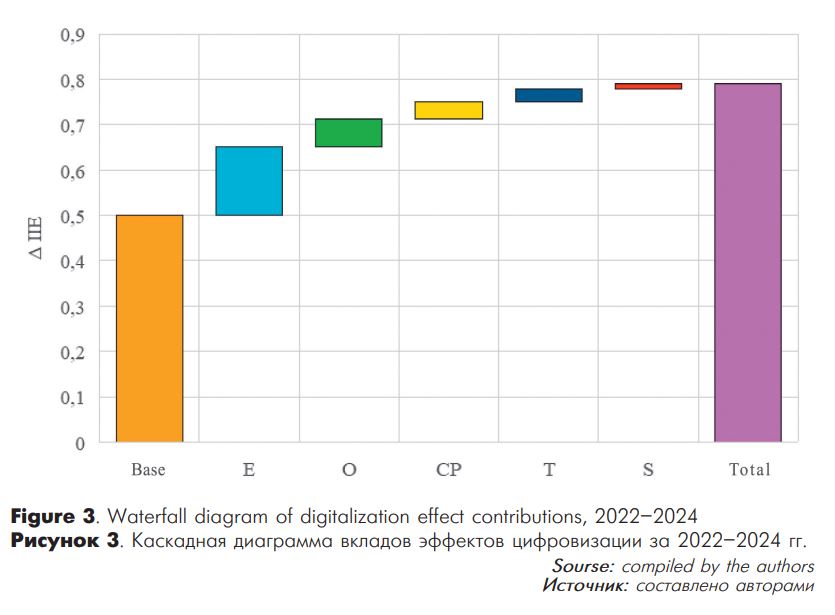
To gain a deeper understanding of each component's contribution to the change in the integral index of digitalization efficiency, that is, to determine how many points each component contributed to the IIE and to identify the "bottlenecks" that slowed growth in 2024, we will use the cascade diagram (2022–2024) presented in Figure 3. The values of the component changes are calculated using formula (21):

The waterfall from 2022 to 2024 demonstrates a total increase in IIE of +0.2897. The contributions of the components to the overall increase are distributed as follows (in order of significance):
– E – 51.9% (+0.1503): the primary driver of growth due to a combination of increased output, working capital discipline, and a moderate reduction in variable costs per unit;
– O – 21.6% (+0.0626): the second most significant contribution, where digital quality practices had a more pronounced effect than the acceleration of the production cycle time;
– CP – 13.2% (+0.0382): digitalization has notably enhanced the loyalty of existing customers/repeat transactions, alongside a moderate increase in market share;
– T – 9.4% (+0.0272): the effect is primarily attributed to the expansion of automation in technological processes, with a lesser impact from improved IT accessibility;
– S – 4.0% (+0.0115): The extensive training in digital literacy has contributed positively, yet employee turnover has somewhat offset this impact.
Based on the results obtained, several practical conclusions can be drawn regarding the management of the digitalization system for the upcoming periods (2025 and 2026):
1.Establish economic drivers (E): a. Continue practices that influence CCC (management of inventory, procurement, accounts receivable and payable, comprehensive plan-fact analytics). This lever became the primary source of additional growth in 2024.
2. LP has reached a plateau (normalized value ~1.00); new growth points require not extensive scaling but precise adjustments: balancing capacities, reducing changeovers, and fine-tuning R/O optimization.
3. Strengthen the social component (S): Focus on ST – a strategy aimed at employee retention.
4. Restore the dynamics of the operational component (O) as demonstrated in 2023: continue to reduce the DR, which has already yielded significant results. The next step is to enhance the LT by addressing bottlenecks (flow mapping, takt time, queues, dispatching, MES systems); even a minor improvement in LT in 2025–2026 will considerably strengthen the IIE.
5. Scale the market mechanics (CP) for customer retention: the primary driver is RP. Formalize the system for repeat transactions: segmentation, triggers, procedures for processing leads/applications, and feedback loops from service to product.
To interpret the values of IIE, it is advisable to utilize a conditional maturity scale, for example:
– <0.40 – fragmented initiatives;
– 0.40–0.59 – local effects;
– 0.60–0.74 – sustainable effect;
– ≥0.75 – end-to-end optimization.
In the case under study, the IIE increased from 0.50 in 2022 to 0.79 in 2024, which corresponds to a transition from local improvements to a sustainable systemic effect of digitalization despite constraints on individual components.
Conclusion
This study has developed and tested a methodological approach for the integral assessment of the effectiveness of digitalization in industrial enterprises, which is based on the aggregation of economic, operational, technical, social, and market effects. The results obtained demonstrate the feasibility of using an integral index as a tool for a comprehensive evaluation of the dynamics of digitalization effectiveness at the core level of the business ecosystem.
The proposed approach has several advantages:
It is important to consider that the use of an integral index is associated with a number of limitations. The aggregation of indicators inevitably simplifies reality and necessitates careful interpretation of the results. The accuracy of the assessment depends on the quality of the underlying data and the regular updating of weights and threshold parameters; otherwise, the index loses its analytical stability. Furthermore, the use of this tool entails additional costs for measurements and the development of analytical competence, without which its practical value significantly diminishes. At the same time, the authors also recognize a key methodological limitation of the proposed approach to evaluating the relationship between digitalization and the performance outcomes of an enterprise, which lies in the inability to distinctly isolate the contribution of digitalization to the changes in integrated effects, as the dynamics of the relevant indicators are shaped by a combination of factors that cannot be reduced solely to digital transformations.
At the same time, the integral index of digitalization effectiveness does not establish a universal normative benchmark for the "extreme" level of digitalization for an industrial enterprise. The range of potential further growth of the index and its associated effectiveness is determined by the company's stage of digital maturity, industry specifics, business model, and organizational constraints. As the index values approach high levels, the increase in effectiveness from further digitalization typically slows down, and the primary contribution begins to come not from individual digital solutions, but from the depth of their integration into business processes, management practices, and interactions with the external contours of the business ecosystem.
In this context, the integral index can be used not merely as a tool for achieving an abstract "maximum level of digitalization," but rather as a navigational indicator that enables the assessment of a company's current position, identifies areas of diminishing returns from digital initiatives, and justifies the transition from quantitative expansion of digital solutions to qualitative changes in management architecture and ecosystem interactions.
Looking ahead, further research may focus on enhancing the methodology by improving the accuracy of assessments (personalizing the threshold parameter θ based on the index components), strengthening the evidential basis (employing counterfactual comparisons and analyzing the relationship with financial outcomes), as well as increasing the adaptability of the tools (dynamic weights). This will expand the analytical capabilities of the integral index and enhance its practical value.
Thus, the study presents and tests a comprehensive method for the integral assessment of the effectiveness of digitalization within the core of business ecosystems, the results of which can be utilized for the advancement of theoretical concepts regarding digital efficiency and the establishment of an empirical foundation for future research.
Firstly, the use of an integral index enables the consolidation of disparate indicators that reflect various effects of digitalization into a single, time-comparable analytical measure. This simplifies the interpretation of digitalization results and provides a comprehensive view of the direction and nature of changes in the efficiency of the enterprise's operations. However, the aggregation of indicators into an integral index does not replace the analysis of individual components and metrics. On the contrary, interpreting the dynamics of the index necessitates a component-wise analysis of the contributions of digitalization effects, which allows for the identification of sources of growth or decline in the integral indicator and helps avoid the dilution of opposing changes. The results of the integral assessment can serve as an informational foundation for analyzing the progress of digitalization, identifying bottlenecks, and justifying adjustments to the enterprise's digital development strategy.
Secondly, the analysis of the dynamics of indicators allows us to view digitalization not as a collection of disparate initiatives, but as an analytically supported cycle of "diagnosis → prioritization → strategy adjustment." The temporal comparison of the integral index and its components (E, O, T, S, CP) enables the identification of imbalances in the effects of digitalization: for instance, an increase in the economic component while the operational component stagnates indicates limitations in the duration of processes (LT) or in the discipline of execution (ST). Analyzing the contributions of components and individual metrics (LP, DR, RP, CCC, etc.) facilitates the identification of factors that shape the dynamics of the index and allows for the determination of areas with the greatest potential for improvement. This creates a foundation for targeted adjustments to the priorities of digital initiatives, resource reallocation, and monitoring the sustainability of achieved results, as well as serving as an early warning function in case significant components start to deteriorate.
1. Abramov, V.I., Gordeev, V.V., & Stolyarov, A.D. (2024). Digital transformation of industrial enterprises into digital business ecosystems: Structural components and practical aspects of implementation. Fundamental Research, (9), 78–85. EDN: EFIZBI (in Russian) https://doi.org/10.17513/fr.43680
2. Vasilieva, E.V. (2023). Methodology for exploring the possibilities of digital platforms and ecosystems: Experience of using Platform Innovation Kit. Modern Information Technologies and IT-Education, 19(1), 24–35. EDN: AHQXPS (in Russian) https://doi.org/10.25559/SITITO.019.202301.024–035
3. Kalenov, O.E. (2023). Estimating Efficiency of Business Ecosystem Functioning in Digital Economy. Vestnik of the Plekhanov Russian University of Economics, 20(1(127)), 162–174. EDN: VJXTRC (in Russian) https://doi.org/10.21686/2413-2829-2023-1-162-174
4. Kovalev, V.E., Yaroshevich, N.Yu., & Komarova, O.V. (2025). The digital future of mechanical engineering: Assessing the potential for platform markets. Upravlenets (The Manager), 16(1), 35–47. EDN: IYNDUH (in Russian) https://doi.org/10.29141/2218-5003-2025-16-1-3
5. Nigai, E.A. (2023). Digital business ecosystems formation in the context of information society development: Management aspect. Ars Administrandi (The Art of Management), 15(3), 353–376. EDN: OFEWBY (in Russian) https://doi.org/10.17072/2218-9173-2023-3-353-376
6. Popov, E.V., Simonova, V.L., & Zyrianov, A.S. (2024). The evolution of business ecosystems in industry: From the classical to the digital type. Informatization in the Digital Economy, 5(3), 341–360. EDN: LVPLGO (in Russian) https://doi.org/10.18334/ide.5.3.121748. (in Russian)
7. Popov, E.V., Simonova, V.L., & Zyrianov, A.S. (2025a). Developing a digitalization strategy for industrial enterprise business ecosystems. Economics and Management, 31(5), 576–592. EDN: TBAVVS (in Russian) https://doi.org/10.35854/1998-1627-2025-5-576-592
8. Popov, E.V., Simonova, V.L., & Zyrianov, A.S. (2025b). Index of integral efficiency of the digital platform business ecosystem. Russian Journal of Industrial Economics, 18(3), 405–420. EDN: NBPLIG (in Russian) https://doi.org/10.17073/2072-1633-2025-3-1440
9. Alhassan, M., & Adam, I. (2021). The effects of digital inclusion and ICT access on the quality of life: A global perspective. Technology in Society, (64), 101511. EDN: LNZOSV, https://doi.org/10.1016/j.techsoc.2020.101511
10. Berente, N., Gu, B., Recker, J., & Santhanam, R. (2021). Managing artificial intelligence. MIS Quarterly, 45(3), 1433–1450. EDN: ZDHGRI, https://doi.org/10.25300/MISQ/2021/16274
11. Björkdahl, J. (2020). Strategies for digitalization in manufacturing firms. California Management Review, 62(4), 17–36. EDN: NXYFTB, https://doi.org/10.1177/0008125620920349
12. Brynjolfsson, E., Hitt, L.M., & Kim, H.H. (2011). Strength in numbers: How does data-driven decision making affect firm performance? In Proceedings of the International Conference on Information Systems (ICIS2011) (pp. 541–558). Association for Information Systems. https://doi.org/10.2139/ssrn.1819486
13. Cubric, M. (2020). Drivers, barriers and social considerations for AI adoption in business and management: A tertiary study. Technology in Society, (62), 101257. EDN: DJMDBS, https://doi.org/10.1016/j.techsoc.2020.101257
14. Deepu, T.S., & Ravi, V. (2021). Exploring critical success factors influencing adoption of digital twin and physical internet in electronics industry using grey-DEMATEL approach. Digital Business, 1(2), 100009. EDN: LCWWVT, https://doi.org/10.1016/j.digbus.2021.100009
15. Hanelt, A., Busse, S., & Kolbe, L.M. (2017). Driving business transformation toward sustainability: Exploring the impact of supporting IS on the performance contribution of eco-innovations. Information Systems Journal, 27(4), 463–502. https://doi.org/10.1111/isj.12130
16. Hess, T., Matt, C., Benlian, A., & Wiesbock, F. (2016). Options for formulating a digital transformation strategy. MIS Quarterly Executive, 15(2), 123–139.
17. Jovanovic, M., Sjodin, D., & Parida, V. (2022). Co-evolution of platform architecture, platform services, and platform governance: Expanding the platform value of industrial digital platforms. Technovation, (118), 102218. EDN: GDZUGD, https://doi.org/10.1016/j.technovation.2020.102218
18. Madanaguli, A., Parida, V., Sjodin, D., & Oghazi, P. (2023). Literature review on industrial digital platforms: A business model perspective and suggestions for future research. Technological Forecasting and Social Change, (194), 122606. EDN: WFJTBI, https://doi.org/10.1016/j.techfore.2023.122606
19. Meng, F., & Wang, W. (2020). Research on the mechanism of digitalization to the improvement of manufacturing enterprises performance based on mediating effect. In 2020 6th IEEE International Conference on Information Management (ICIM) (pp. 122–126). IEEE. https://doi.org/10.1109/ICIM49319.2020.244683
20. Nandkumar, A., Mani, D., & Bharadwaj, A. (2018). Market returns to digital innovations: A group based trajectory approach. Academy of Management Proceedings, 2018(1), 15241. https://doi.org/10.5465/ambpp.2018.15241abstract
21. Park, Y., & Saraf, N. (2016). Investigating the complexity of organizational digitization and firm performance: A set-theoretic configurational approach. In Proceedings of the 22nd Americas Conference on Information Systems (AMCIS2016). Association for Information Systems.
22. Rymaszewska, A., Helo, P., & Gunasekaran, A. (2017). IoT powered servitization of manufacturing: An exploratory case study. International Journal of Production Economics, (192), 92–105. https://doi.org/10.1016/j.ijpe.2017.02.016
23. Rungi, M. (2019). Digitalization: Size doesn’t matter, put focus on product-and-service, not on process. In 2019 IEEE International Conference on Industrial Engineering and Engineering Management (IEEM) (pp. 741–745). IEEE. https://doi.org/10.1109/IEEM44572.2019.8978749
24. Sener, E., & Yuksel, A.N. (2017). The reflections of digitalization at organizational level: industry 4.0 in Turkey. Pressacademia, 6(3), 291–300. https://doi.org/10.17261/pressacademia.2017.688
25. Sia, S.K., Soh, C., & Weill, P. (2016). How DBS Bank pursued a digital business strategy. MIS Quarterly Executive, 15(2), 105–121.
26. Steele, K., Carmel, Y., Cross, J., & Wilcox, C. (2009). Uses and misuses of multicriteria decision analysis (MCDA) in environmental decision making. Risk Analysis, 29(1), 26–33. EDN: MMJGDH, https://doi.org/10.1111/j.1539-6924.2008.01130.x
27. Verhoef, P.C., Broekhuizen, T., Bart, Y., Bhattacharya, A., Dong, J.Q., Fabian, N., & Haenlein, M. (2021). Digital transformation: A multidisciplinary reflection and research agenda. Journal of Business Research, 122, 889–901. EDN: BUXXSM, https://doi.org/10.1016/j.jbusres.2019.09.022
28. Westerman, G., Bonnet, D., & McAfee, A. (2014). The nine elements of digital transformation. MIT Sloan Management Review, 55(3), 1–6.
29. Zavadskas, E.K., Turskis, Z., & Kildienė, S. (2014). State of art surveys of overviews on MCDM/MADM methods. Technological and Economic Development of Economy, 20(1), 165–179.
Evgeny V. Popov – Doctor of Economic Sciences, Doctor of Physical and Mathematical Sciences, Professor, Corresponding Member of the Russian Academy of Sciences, Director of the Center for Socio-Economic Research
Scopus Author ID: 24822113400, WoS Researcher
ID: H-3358-2015
66, 8 Marta St., Yekaterinburg, 620144
Victoria L. Simonova – Candidate of Economic Sciences, Deputy Director of the Center for Socio-Economic Research
WoS Researcher ID: j-7050-2017
66, 8 Marta St., Yekaterinburg, 620144
Aleksandr S. Zyrianov – Postgraduate student
WoS Researcher ID: LEL-8920–2024
66, 8 Marta St., Yekaterinburg, 620144
Popov E.V., Simonova V.L., Zyrianov A.S. Integral index of digitalization efficiency in the system of analyzing business ecosystem development. Economics of Science. 2026;12(1):86-105. EDN: OBDLZH
Editor-in-Chief
Prof. Dr. Oleg Sukharev Email this article (Login required)
Email the author (Login required)
Email this article (Login required)
Email the author (Login required) 119571, Moscow, Prospekt Vernadskogo, 84/1, room 715
Russian Presidential Academy of National Economy
and Public Administration (RANEPA)
tel.: +7(499)956-02-14
e-mail: ecna@ranepa.ru