Contents
Scroll to:
EDN: FLQPOC
Scroll to:
The study is aimed at identifying the essential drivers, conditions and factors of harmonious scientific and technological development of the economy. The goal is to deepen the concept of moral economics of the academician D. S. Lvov by substantiating the regulatory function of morality and the principles derived from it in the interactions of subjects of the socio-economic system to develop the economy through the scientific and technological way. The results and conclusions from the works of Academician D.S. Lvov are used, as well as the methodology of system analysis and synthesis of the economy, the related postulates of the system economic theory and system economic paradigm of Corresponding Member of the Russian Academy of Sciences G. B. Kleiner. With the example of the tetrad model, it is shown how the failure of society to receive the resources needed to meet human physical, intellectual, and spiritual needs causes, through the contour of recursive linkages, the failure of as itself as other sectors to receive the resources all they need to implement functions in the system. By studying the connections and interactions between the sectors of the macro-system through the view of the moral economy concept, the author’s hypothesis is confirmed that morality, a basic attribute of the social life of society, is a regulator in the mechanism of feedback between the social sector and the economy, society and the state, and on this basis serves the self-organization and self-development of the macro-system. Such results clarify the principle of action of the fundamental postulate of the theory of moral economy of D. S. Lvov about the leading role of society in the macro-system, in the opposite the policy of the reforms as they have been carried out. The conclusions include the imperative of a system approach to human development, an emphasis on humanitarian aspects in solving the problems of technological sovereignty.
Nikonova A.A. The science of moral economics and Its systemic connection loop by the works of academician Lvov (on the 95th anniversary of D. S. Lvov’s birth). Economics of Science. 2025;11(3):11-29. EDN: FLQPOC
Introduction
The characteristics of the intellectual economy transform its quality, reshaping its structure, technologies, stakeholders and their interactions (Intellectual technologies, 2025). The increasing complexity and rising costs of technological creation, together with the accelerating pace of technological change, mean that knowledge and intellect are now key factors in competitiveness, technological sovereignty, and the resilience of the national economy. International practice across diverse countries confirms the growing efforts to strengthen intellectual potential, including technical skills, cognitive abilities, human qualities, and interpersonal capacities (Ayinde & Kirkwood, 2020; Ciarli et al., 2021). At the same time, the system approach to this field is steadily gaining attention (Neumann et al., 2021; Reiman et al., 2021).
The pressure of sanctions on Russia highlights the need to address the challenges of scientific and technological development through domestic sources. However, Russia's significant strengths, such as the high quality of its labour resources and intellectual potential (Bagrinovsky & Nikonova, 2015), have been undermined by several phenomena unique to Russia:
The central issue is that policy and governance have been guided by an economic paradigm isolated from other spheres and grounded in value measurement of outcomes and profit criteria. This approach has marginalised the domain of knowledge and technology generation, in which human abilities, motivations and relationships are crucial to the effectiveness of research and development. As Maiminas observed, “the practically ‘separate’ understanding of the economic and the social permeates our entire state policy” (Maiminas, 1998, p. 38).
In his analysis of the perestroika period, Academician D.S. Lvov emphasised the detrimental effect on Russia’s prospects of prioritising economic goals and material considerations without establishing the necessary conditions or considering the social context, despite the fact that this context is crucial for fostering and reinforcing the foundation for an innovative economic transformation. He observed that “In the formulation of economic policy, considerations of morality and justice were disregarded and in debates with opponents continue to be derided as manifestations of 'Soviet-style thinking'” (Lvov, 2003b, p. 18). Consequently, the country lost both the pace and quality of its scientific and technological development, as well as its intellectual sources of progress (Aganbegyan, 2022; Nikonova, 2023).
Lvov insisted on replacing the axiomatic framework of the new economy with an emphasis on fundamental driving factors, “so that the economy itself would be constructed on new axiomatic principles, reflecting the priority of the spiritual and the living over the material and the dead. A new axiomatics is as vital to us as air. Moral axioms must appear in the new economy as a kind of constraint” (Lvov, 2006b).
The axioms formulated by G.B. Kleiner in line with Lvov’s approach (Kleiner, 2010) contributed to a systemic representation of the economy within the broader social framework and laid the foundation for the postulates of system economic theory and the system economic paradigm (Kleiner, 2011, 2014). As Kleiner emphasised, “the social and economic development of a country are inseparably connected. Sustainable economic development is impossible without the development of society and the provision of interaction between them” (Kleiner, 2010, p. 36).
At the core of our approach to understanding the mechanisms of change, modelling and governance, there must be axioms relevant to the intellectual economy and its representation in the minds of researchers and managers. These axioms are subsequently reflected in state policy and strategies relating to the societal sector. We propose considering society as both the environment in which the socio-economic system operates and a supplier of resources (including intellectual ones), and the ultimate goal of economic activity.
Our hypothesis reinforces Lvov’s axiom that moral norms function as criteria integrating goals and means, performing a regulatory role in coordinating the interactions of actors with differing interests and utility functions. This study aims to confirm the hypothesis, thereby deepening Lvov’s approach to the fundamental conditions for balanced scientific and technological development by substantiating the regulatory function of morality within his concept of moral economy. The aim is to show the scientific value of D.S. Lvov's ideas about the interactions between the economy and society, and to specify the operation of direct and feedback mechanisms between them as instruments of self‑development and harmony.
Methodology, materials and methods
The permanent crisis in Russia, manifested in areas such as production, real incomes, technological renewal and public sentiment, appears paradoxical when set against favourable initial conditions, natural wealth and intellectual potential, including the population level of education, science, culture and spirituality. As Lvov observed at the turn of the twenty‑first century, “per capita, Russia’s resource potential is 2–2.5 times greater than that of the United States, 6 times greater than that of Germany, and 18–22 times greater than that of Japan. Russia’s natural reserves are valued in trillions of dollars. … The national wealth of the country was sequestrated by no less than two‑thirds during the years of reform” (Lvov, 1999, p. 19). Imbalances between sources of national wealth, production levels, living conditions and activity had destructive effects on the economy and society (Lvov, 2003a, 2003b, 2003c, 2004a).
When explaining the causes, Lvov pointed to the influence of distributive relations on creative and spiritual potential, which is the driving force of contemporary dynamics. This is the condition of the “supporting stratum of the nation” in terms of scientific and technological economic development, as well as society's response to ongoing economic and social transformations (Lvov, 1999).
Certain arguments within the assumptions of neoclassical economic theory can help us to understand the instability in Russia during the brief period of transition to a market economy and during the global financial crisis. However, this framework cannot explain the bifurcation of the economy during the pandemic (2020–2022) or the geopolitical-economic crisis (2022–2025). Nor can it account for the relatively favourable period (2012–2014), when the economy suddenly entered a recession at the turn of 2014–2015, despite extraordinarily high oil prices and growth in the main source of budget revenues. Consequences included declining birth rates, negative population growth, a reduced pace and quality of scientific and technological development across all indicators (except publication output) and a 8.7% fall in real per capita incomes between 2014 and 2018 (Aganbegyan, 2019; Varshavsky, 2019; Nikonova, 2023).
When examining structural contradictions, it is important to consider the economy and society as a whole, comprising elements that are connected by multiple linkages. Theoretical postulates of synergetics assume such integrity and the non‑linearity of these connections. Appropriate managerial interventions may facilitate the self‑organisation of the system (Haken, 2009). However, these approaches fail to explain the influence of critical factors, particularly social and political ones, despite the apparent universality of descriptions of self-organising and self-developing systems (Kniazeva, 2004).
The approach to the socio‑economic system (SES) as a dissipative system implies a cognitive transition from analysing the diversity of its components to synthesising structural linkages and interactions during essential transformations. Dissipative systems are characterised by instability of state and readiness to shift in one direction or another, a tendency that is intensified by external influences or internal contradictions within the system, for example between the centre and the periphery in hierarchical structures or among other parts across horizontal connections. To overcome bifurcation and maintain the integrity of the system, it is essential to understand and follow the law of norm, allowing for structural deviations, anticipating them where possible and adopting preventive measures. For this purpose, the postulates of system methodology are applicable, together with the methods of system analysis and synthesis – two interrelated stages of systemic research. System synthesis allows the possibility to identify invisible structural linkages and interactions that determine the state and behaviour of systems under different conditions, to discern the sources of bifurcations in varying contexts, and to forecast the trajectory of the system under study.
The essence of the system approach to the economy, as developed here, lies in representing it as a complex system that is interconnected with other systems — geological, biological, and, in this study, social. This understanding forms the basis of the methodology for investigating interrelated systems as a whole. As Maiminas observed, "methodologically, the social and the economic are nothing more than two facets, two dimensions of a single societal process. This is a typical and vivid example of a polystructural, multifunctional complex system'" (Maiminas, 1998, p. 38). Such systems cannot be adequately described within the framework of an outdated linear paradigm.
Synthesising the SES on the basis of the economic system paradigm (Kleiner, 2014) enables the balance of fundamentally different elements within a single, indivisible national system to be studied. Constructing the SES provides insight into the qualitative and quantitative characteristics of the connections between its components and their contribution to the synergy of the entire system.
Adopting a method that moves from the particular to the general – analysing virtually all aspects of the economy, including the efficiency of technology and production, the evaluation of scientific and technological projects, property relations and income distribution, and the role of the state in economic policy and managing scientific and technological development – Lvov synthesised a single national economic organism. He identified the leading role of society within the integral system and formulated the rules for its functioning, terming it “moral economy” (Fig. 1) (Lvov, 2004a).
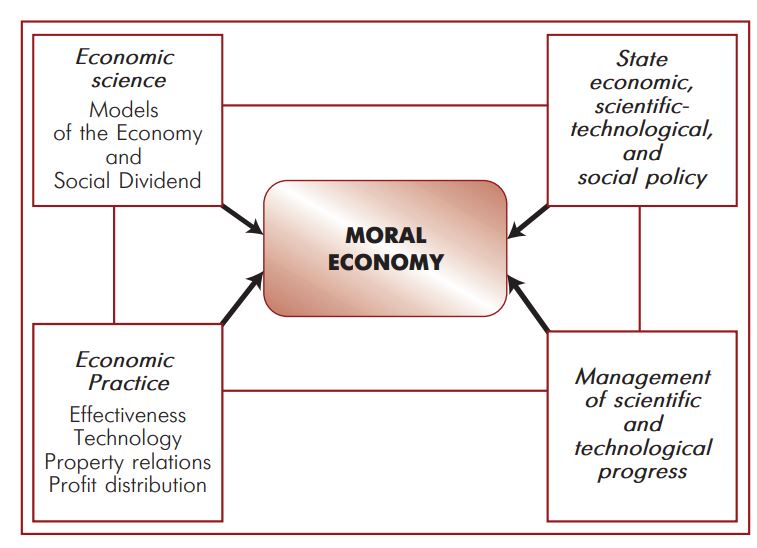
Figure 1. The ascent of D.S. Lvov’s works towards the concept of moral economy
Source: сompiled by the author
At the core of Lvov’s concept of moral economy lies the principle of fair distribution of rent income – transferring part of the wealth created by labour after “converting rents from all used (territorial and natural) resources into public revenues, accumulated within the system of public (state) finance. This sum of rent income would constitute the net income of society as a whole, in which all its members would hold an equal share” (Lvov, 1999, pp. 26–27).
The methodology for studying the systemic role of society within the framework of the moral economy is based on the following premises:
Based on this understanding of the role of the social system within the SES, Lvov began studying the objective divergence of interests among representatives of different sectors and their relationships. Unlike F. Knight, for example, who emphasised ethics in relations, behaviour and approaches to activity when addressing the problem of reconciling commercial and non-commercial interests (Knight, 2009), Lvov identified a higher essence – spirituality – as the key element, regarding it as the foundation of the SES integrity and resilience. He argued that spirit is the principal force that binds the system together and prevents its collapse at the point of bifurcation. "Lvov was convinced that this type of economy could sharply reduce losses from the diversion of resources to shadow and criminal structures" (Lemeshev, 2018, p. 193).
Thus, Lvov laid the scientific foundations and developed the principles for bringing together the key components of the national economic system as a whole (Nikonova, 2025). G. B. Kleiner integrated all elements of the SES into the tetrad model, demonstrating that a harmonious and complementary exchange of resources and capabilities is essential for balance within the integral system (Kleiner, 2014).
Here, the fundamental principles of Lvov's moral economy science are examined from the perspective of systemic interactions among the key sectors of the macro-system. The effects of the attributive properties of the social system – particularly morality – are of considerable scientific and practical interest when it comes to identifying the driving forces behind the system self-organisation and self-development, and/or the levers of governance. The discussion confirms the central hypothesis of this study, which is that morality plays a regulatory role in the feedback mechanisms linking society with the economy and the state. The conclusions set out priorities for state policy, national strategies and projects of all kinds that support the fundamental factors of development and sovereignty of Russian Federation.
RESULTS
We will demonstrate the sequence of interactions and their outcomes within Kleiner's normative tetrad model at the macro level (Fig. 2). We will then compare these with the conclusions of Lvov and other researchers, as well as the author's own results obtained on the basis of official statistical data.
Normative model
The contours of mutual influence among the four systems (economy, business, state and society) are determined by the reciprocal complementarity of the resources and capabilities exchanged between counterparties, which are required to realise their functional objectives. These objectives may not be, and sometimes cannot be, expressed in value terms.
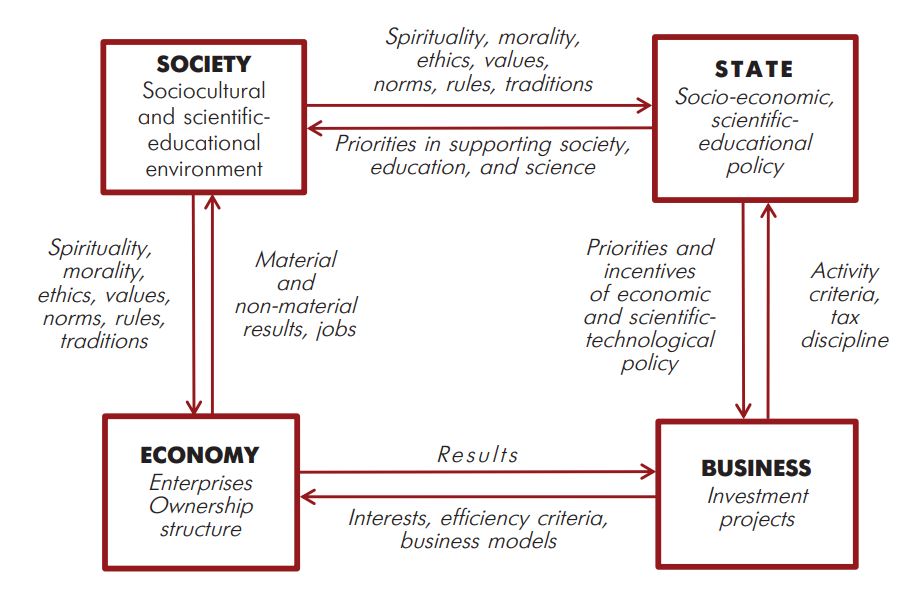
Figure 2. Interactions in the macrosystem Tetrad model: normative model
Source: adapted from (Kleiner, 2014, p. 27)
Within the systemic contour of Lvov's moral economy, society, as the leading system of the SES, transmits to the economy through feedback mechanisms its creative capacities, labour resources, values and moral norms, expressed in qualitative or quantitative form as reflections of the degree of satisfaction with the received resources. However, the intellectual, value-based and other resources generated and transmitted by the social system may not only have a positive influence on the harmony of the SES, but also have a potentially disruptive effect as a result of the SES interaction with the external environment and the nature of resource exchange within the national SES.
Imbalance in the macro-system
As Lvov's conclusions and current practice demonstrate, reality is far removed from the normative model. The balance of resource flows, including energy, knowledge, information, money, signals, etc., exchanged among the sectors of the SES has been disrupted. Lvov identifies the root causes of the imbalance in the national wealth created by labour and the level of human and scientific-technological development of the country, in distributive relations and the neglect of basic needs at the entry point of the social system by the state and economy. In response, destructive consequences arise for the economy, the state and society alike: apathy, brain drain and others.
Since the beginning of perestroika, the moral law (the imperative of change for the benefit of all) was ignored: “the main goal was not reform but power. As a result, constant failures of governance arose” (Lvov, 1999, p. 28). The social platform for reform was not properly prepared. Changes in the economy received neither a formal, coordinated legislative foundation nor the necessary socio‑cultural and institutional basis as a real foundation for the transition to a market economy, including shared values and moral principles for the transformation of relations.
Using the tetrad to focus on the social system, we will demonstrate what is wrong with the way resources enter and leave it, and explain why the Russian economy may be considered immoral from Lvov’s perspective (Fig. 3).
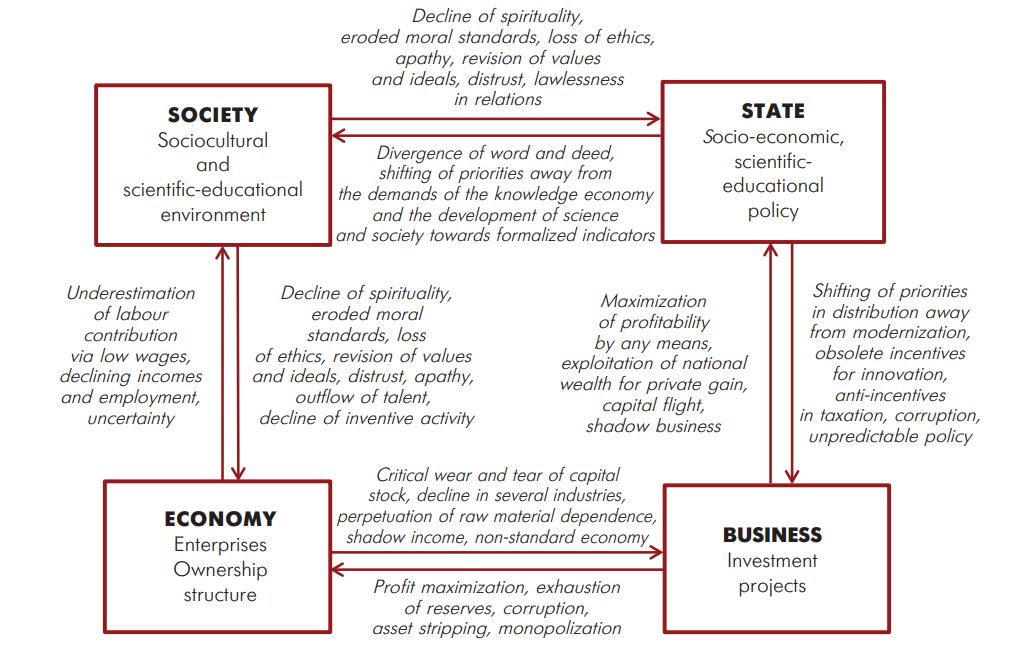
Figure 3. Tetrad of the Russian national macrosystem: descriptive model
Source: сompiled by the author
The imbalance in resource exchange stems from the fact that systems do not transmit to one another what is required to fulfil their designated roles within the macro-system. Thus, the unjust distribution of property and rent-seeking business models contribute to the formation of an immoral climate for human development, business and the state adoption of strategic and managerial decisions. Conditions are created that not only permit but impel business towards the immoral exploitation of land, labour, and natural deposits, skimming the cream from easily accessible resources while reducing its contribution to GDP. Simultaneously, these conditions drive the state towards an immoral policy of destroying its people: cutting social expenditure, suffocating science – first applied, then fundamental (by reforming the Russian Academy of Sciences while underfunding science), reducing investment in equipment modernization and new technologies, and maintaining prohibitively high credit rates.
The multitude of projects drains the state, the economy and society of the resources necessary for them to perform their functions within the system normally. Examples of social projects include the introduction of a flat tax scale in 2000, raising the retirement age, implementing pension reform, introducing the Unified State Examination and the Bologna system of higher education, and optimising healthcare. Examples of sectoral projects with negative consequences include the officially recognised corruption within Roscosmos and Rusnano, and construction projects, including Olympic projects. These projects led to the weakening or loss of microelectronics, aircraft manufacturing, shipbuilding, mechanical engineering and instrument engineering, and there have been attempts to restore them in connection with sanctions.
Even before the completion of the full exchange cycle, any mismatch between the transmission of resources and the needs may, through feedback mechanisms, act as a conduit for negative changes in the sectors, including the one that was the source of such deformation.
At the same time, all four systems under consideration are recursive; the state and dynamics of each depend on their effects on neighbouring systems, and through chain linkage, on each other. In other words, transmitting a resource in an amount and/or quality that is inappropriate for balanced exchange (for example, if it is morally or physically harmful to the recipient) may have negative consequences for both the receiver and the transmitter, as with problematic innovations (Varshavsky & Kuznetsova, 2024). Within the systemic contour of circular connections, imbalances are amplified. Thus, bifurcations of the SES may arise without external impacts, such as oil prices or sanctions.
Due to the specific characteristics of society, the recursive properties of the social system allow deeper penetration of the results of such impacts into the social fabric compared with other systems. This generates irreversible consequences for society. However, the negative influences of resource transmission from the social system may also be harmful and irreversible for other systems. Therefore, “the reliance of the state on such a type of personality, whose behaviour is guided primarily by self‑interest, cannot create the prerequisites for economic prosperity and socio‑political stability” (Lvov, 2006a, p. 166). The specificity of social resources includes spirit, morality, values, trust, patience, psyche, health, knowledge, intellect, will and faith. On the one hand, they convey strength or weakness, threat or advantage to those who receive resources from society – the economy and the state (direct linkage). On the other hand, they serve as an indicator and controller for the quality of resources entering the social sector. This forms the basis for its response and for changes in relations with counterparties (feedback). Such phenomena are revealed in the works of D.S. Lvov.
According to Lvov, the negative effects of state policy can be summarised as follows:
Elements of the socio‑cultural, mental and scientific environment are extremely sensitive to such phenomena. The simplification of assessments, criteria and scientific approaches is a consequence of environmental changes under the influence of pinpoint management, the mechanistic scientific‑educational and socio‑cultural policy of the state towards the environmental system, based on the principle of forced simplification of the managed system in response to impacts inadequate to its complexity. The primitivisation of the intellectual and socio‑cultural sphere extends to business (choice of spheres and types of activity, focusing mainly on commerce, retail and the raw‑material sector), to the economy (structure and technologies), and, closing the circle, to social life (ideals, values, aspirations, relations between people).
The technological complexity of Russian products, with the exception of defence industry output, is predominantly low; with the introduction of sanctions, it declines not only as a result of external factors but also internal ones. The recursive properties of the social system are manifested in the primitivisation of cultural demands and in the encouragement of corresponding supply, which becomes acceptable for consumption. Examples include kitsch artefacts and products that contribute to the lowering of the level of human development. Ultimately, this results in the de-intellectualisation of human beings as bearers of the nation's socio-cultural genotype, as well as their simplification as factors of production and labour. Both outcomes reduce the potential for scientific and technological development and directly obstruct the formation of the dynamic capabilities and competences needed for the national economic system to transform under sanctions in the long‑term interests of national security or to withstand the current crisis.
Science in the economy and the economy in science
The scientific community is acutely sensitive to the injustices and losses caused by the de-intellectualisation and primitivisation of material, moral-ethical, cultural and legal spheres: “the man‑made disappearance of the culture of thinking from the whole to the parts led to the weakening of the influence of science on society. In science the interconnection of fundamental, experimental and applied disciplines was eliminated. In governance the interconnection of mission, ideology and culture disappeared. In education the interconnection of knowledge, skills and abilities was destroyed. In culture the interconnection of beauty, the sublime and utility vanished. Norms of law and ethics ceased to be formed through the interconnection of morality, ethics and law”[3]. However, the weakness of civil society and other features of the social sphere hinder the consolidation of forces and reduce the likelihood of accumulated claims being presented to other systems. Furthermore, these systems are in no hurry to fulfil their functional obligations towards society. The irresponsibility of the state and businesses, together with the weakening of public control, contributes to the underperformance of functions that balance resources within the system, resulting in the impoverishment of resources that support the real economy and society. “The irresponsibility of private owners has often become on a par with the irresponsibility of the authorities” (Lvov, 1999, p. 22).
In addressing the moral component of the relationship between the authorities and science, it is important to examine the position of science within the framework of national priorities. According to Lvov, for the improvement of the technological and production base of industry “the first priority” should have been “the restoration of the sphere of research and development through the advancement of fundamental science. For this, a timely increase in expenditure on science and R&D is vitally necessary” (taking into account the significant time required for the implementation of R&D in science‑intensive sectors). In contrast to the policy of freezing expenditure on R&D at the level of 1% of GDP, Lvov believed that, in view of the global trend of accelerated growth in such spending, "as a normative for the period up to 2010 the level of domestic expenditure on science should be set at no less than 1.6–2% of GDP (and, in the case of accelerated development of science-intensive industries that determine demand for the results of R&D, 2.2–3%)" (Lvov, 2004b, pp. 62–63), otherwise the losses in the technological quality of the economy and in intellectual potential will be irreversible.
“Countries with the highest levels of education, science, healthcare and culture, and of course spirituality, have always aspired to the role of leaders in socio‑economic development. … It is comparatively easy to compensate for the loss of part of the economic potential. But one cannot count on regeneration when it concerns fundamental science, the system of general and professional education, the overall system of reproducing the intellectual elite and highly qualified personnel, and their social status. This is the essence of the matter. Either we harness the creative factor, for which we have not yet lost the capacity, or we will become one of the key players in a global underground, a destructive belt threatening the existence of both Russia itself and the entire world. This is why we must turn the entire economic mechanism toward supporting and developing the backbone of the nation. Our priorities in this regard must be clearly defined. They are: science, education, and public health” (Lvov, 1999, p. 15; Lvov, 2006b).
Against the backdrop of mounting concerns over technological sovereignty of Russia, a quarter of a century after Lvov’s calls to action, plans are in place to increase R&D spending to at least 2% by 2030. [4] (the average level in the EU in 2020[5]).
The double level of remuneration for scientific staff (Decree of the President of the Russian Federation of 07.05.2012) has not been achieved in 71 constituent entities of the Russian Federation[6]. Scientific activity within the framework of fulfilling the state assignment is referred to as the provision of state services. On 14.07.2025, at a meeting with the Deputy Minister of Science and Higher Education of Russia, responsibility for non‑compliance with the Decree was placed on the heads of institutes rather than officials, and it was they who were instructed to find the means for its implementation. Despite the disproportion between the growth of funding (20% for research organisations and 20.2% for universities in 2025) and the surge of inflation and wages in the sector connected with the defence industry over the period 2022–2025, the authorities called for “measures to improve the efficiency of organisations”: to optimise structure, make better use of property, increase labour productivity and extra‑budgetary sources; “if revenues fall, staffing must be reduced.”[7]. Russia is the only country among comparable states where the number of researchers is declining, including on a per capita basis. [8].
At the meeting of the Government Commission on Scientific and Technological Development on 28 July 2025, the allocation of budgetary and additional funds for science for the period 2026–2028 was also linked to the task of ensuring their efficient use[9]. Leading scholars have repeatedly demonstrated that the existing formal approaches to assessing the scientific sphere, applied to the distribution of funding and the regulation of remuneration, motivate scientists not towards the creative solution of tasks of technological independence (which no one but them is capable of solving), but towards obtaining the corresponding formal results (Sukharev, 2025b).
In response to the challenging question of how to evaluate effectiveness and its correlation in the real sector of the economy and scientific activity, Lvov provided a clear systemic answer: science, education and other social spheres cannot in principle be approached with economic measures. In these areas, costs increase more quickly, but a reserve of scientific and human potential is created for the future development of the system, which cannot be measured from the current perspective (Lvov, 2004b, pp. 62–63). “The maintenance and multiplication of this potential is now extremely costly, requiring enormous resources from society. However, without it, there can be no innovative society or independent state capable of rapid self-development in the current highly complex geopolitical and economic situation” (Lvov, 1999, p. 15).
In Kleiner’s systemic economy, “the social and the economic are not two sides of a coin, but rather two perspectives on any social phenomenon or process. Just as the systemic approach integrates the notions of optimality criteria and constraints in optimal management problems, making it possible to consider them within a unified framework that takes into account relations of substitutability, complementarity, and the comparative importance of individual constraints and criterion indicators, so too does the application of Lvov’s concept of the economy of conscience make it possible to identify the moments at which certain economic constraints transition from the category of imperatives to that of desirability, and social criteria from desirability to imperative” (Kleiner, 2020, pp. 190–191).
However, the existing economic mechanisms and institutional support are geared towards maximising profit. This is facilitated by the growth of the transactional sector, including in science and education, and more broadly by the financialisaton of the economy. The proportion of GDP spent on science and education is two to three times lower than in leading countries. “When the first satellite and then the first human were launched into space, Russia invested 11% of its national income in education (compared with 4% in the USA), and our education system was recognised as the best” (Aganbegyan, 2022, p. 15). Today, Sber has begun to engage in educational activities, offering a formalised, narrowly specialised (competence-based) approach to learning. This is evidently intended to guarantee future revenues and threatens the systemic thinking of students as the foundation of subjectivity and self-identification.
In this case, the question remains open as to the driving forces for the transformation of the economy towards technological sovereignty and sustainable development. This transformation requires increased expenditure on improving the quality of human resources and intellectual potential.
Discussion
The results help to understand the causes of many paradoxes and inconsistencies in Russia, including the humanitarian‑technological vector of movement, which is a leading trend in global development (Ivanov & Malinetsky, 2020).
In Lvov’s works the fundamental role of society in the national system as the bearer of moral laws and values is verified; yet society is particularly vulnerable in the case of bifurcations. Therefore, Lvov insisted on the careful inclusion of society in the project of market restructuring, on the adoption by the state of special measures to prepare society for change, and on responsibility for these measures. “Power must restructure not only reality itself – the economy – but also adjust the subjective attitude of people to this reality, that is, transform the image of the social world previously formed among citizens. Reforms, especially those taking place in Russia, are accompanied by hardships and great misfortunes for vast masses of the population. … The losses that arise must be compensated, otherwise dissatisfaction with reforms, the growth of social tension, and even direct conflicts with power are inevitable” (Lvov, 1999, pp. 28–29). Yet the reformers acted differently: they threw society into the furnace of hasty reforms. In Lvov’s view, an open dialogue between society and power is needed “as the most important segment of the entire system of social communication, which must be sharply expanded” (ibid., p. 29). According to many scholars, a mechanism is required for organising dialogue between society, business and power[10].
As a result of the critical failure of the society to receive resources from the state and the economy to meet the needs of a significant part of citizens (in extreme cases, vital ones), the system ability to reproduce social norms, human capacities and to transmit them into the real sector of the economy and into the state system is diminished and even lost (Fig. 3).
The characteristics of spatial and temporal boundlessness allow intellect and talent to find application beyond territorial and temporal limits. In the unfavourable conditions that have arisen, minds are flowing irreversibly out of Russia. The transformation of values, morality, and behavioural models allows people to leave without regard for family, relatives, and loved ones. This is possible because changes are occurring within the environmental system itself, with values being revised under the influence of other systems and changes within society. According to the normative model of the tetrad, other systems not only deprive society of the resources they are ideally meant to supply, but also contribute to the transformation of values, morality and behavioural models. Even worse, the properties of the social system allow other systems to provide society with resources that are similar to environmental ones in terms of uncertainty regarding spatial or temporal characteristics. This includes providing resources that are not needed. For example, alongside processes for managing science, criteria and evaluations that approve or encourage formal and/or unscrupulous creativity may be transmitted. Through connections from the economy and business, fashions for luxury and other patterns of the “consumer society” may be ingrained in public consciousness, replacing fashions for spiritual and intellectual development.
Analogous forms of negative influence apply to demography, healthcare and the physical reproduction of the potential of the social system. “In fact, we work poorly because we live poorly” (Lvov, 2003b, p. 23), since the economy poorly compensates the costs of labour: “For one dollar of wages the average Russian worker produces today (at the turn of the twentieth to the twenty‑first century – author’s note) roughly three times more GDP than the equivalent American. … Such high exploitation of labour is unknown in any developed economy of the world” (ibid.).
Consequently, Russia is entering the fourth scientific and technological revolution, having been drained by the negative effects of reforms. The outcomes repeatedly cited by Lvov in publications and scientific reports to the Presidium of the Russian Academy of Sciences are confirmed by the author’s subsequent research: societal fatigue; self-reproduction of poverty; reduction of intellectual and creative forces due to a disparaging attitude towards scientists, science, education and human life; and the application of moral-legal and financial-economic measures that infringe upon the population health and wealth distribution, “given to the country by God”, in Lvov's words. This wealth is due to the entire population in the form of a national (social) dividend from natural rent (Lvov, 1999, 2003a, 2003b, 2004a, 2004b).
It is not only the social system and human potential that suffer from the disharmony of systemic interconnections, but all four systems. The economy, as a system limited in space, is deprived of the inflow from the social sector of inventors, talented, educated personnel oriented towards creativity and morally and physically healthy. Government, as a system limited in time, is deprived of the trust of citizens and of reliance on its own science during periods of geopolitical and economic cataclysms.
The difficulty of emerging from the crisis can be explained by the reproduction of imbalance in the SES on the basis of direct and feedback connections. “The intensive eradication of the moral component of social existence is bearing fruit. … There is a clear reaction to the attempts undertaken to destroy the historically established way of life of people, their settled notions of good and justice” (Lvov, 2003b, p. 14). In the restructuring of the country “the permissible boundary was crossed – the spiritual and the living were replaced by the material and the dead, turning people’s consciousness towards enrichment at any cost” (ibid., p. 15). Economy and business were placed above society, “the material and the dead we placed higher than the spiritual and the living” (Lvov, 2003a, p. 678).
Immoral attitudes towards society are manifested in the subordinate position of the individual in the economy, in the usurpation of property, and in state economic, scientific‑educational and social policy. Immoral resource exchange seriously damages the social system, radically reshaping the fundamental foundations of society: values, relations within society, the family and the collective. Through the contour of connections this negatively affects all systems of the SES.
Lvov’s science of moral economy presupposes for the SES an alternative: either to disintegrate, or to preserve itself and move towards development. In the systemic contour of connections and interactions between parties with fundamentally different interests, the moral imperative acts as a regulator and universal equaliser, helping to strike a balance between commercial and non-commercial interests and priorities in the behaviour of actors. In the Soviet model the functions of regulation, control and management of the behaviour of representatives of different sectors were performed by the state institution of party membership, which endowed itself with the function of caring for morality (“The moral code of the builder of communism” in the CPSU (Communist Party of the Soviet Union) Programme adopted at the 22nd Congress of the CPSU in 1961). In Tsarist Russia these functions were fulfilled by faith in God, the Tsar and the Fatherland. In the absence of such institutions and a constitutionally established ideology, against the background of the confusion of former values and ideals, the destruction of the social and cultural environment, the dominance of goals of appropriation for the sake of appropriation, and the absolutisation of material and formal assessments of the quality of economic and scientific‑technological development, a vacuum has arisen in the mechanism of feedback – there are none, they do not work for development. “Monetarist dogmas turn out to be above the human being, above the inalienable right of everyone to a decent standard of living. The current guidelines of financial policy divert attention from the fundamental and the essential – from creation for the sake of all, orienting business not towards the development of production but towards intermediary services, the overwhelming majority of which are speculative, or even directly criminal in nature” (Lvov, 1999, pp. 16–17).
Conclusion
The central problem of the imbalance of the SES and its consequences lies in the fact that property relations (the object system, unlimited in time and limited in space), rent‑oriented business projects (the project system, limited in time and in space), and socially irresponsible implementation of state policy and governance by power structures (the system limited in time and unlimited in space) have been placed above society (the system unlimited in space and in time). Three limited systems, incapable in principle of autopoiesis, unlike society, have been set above it, dictating the paths of social development and imposing their own frameworks for the formation of the social and intellectual environment. As Lvov convincingly showed, “the majority of the population, being the main victim of the upheavals of perestroika, never gained real access to the making of strategic decisions in socio‑economic life. Its course is still directed by power structures without feedback – the dictatorship of the ruling strata. All this cannot but distance power from the people. The latter lose the remnants of trust in reforms and turn to the search for socially destructive ways of compensating for unfavourable changes” (Lvov, 1999, p. 29).
In the moral economy of Academician D. S. Lvov (Lvov, 2004a) emphasis is placed on the categorical imperative of the supremacy of morality in social relations as the basis of the existence of society for all time, setting the foundation for harmony in the relations and connections of society with other systems of the SES. “Moral principles must become the foundation of the future economy of Russia” (Lvov, 2003b, p. 15). The strategic component of the social dividend must be spent on public needs: free healthcare and education (Lvov, 2003a, p. 686).
Lvov formulated the “law of the norm” through the features of the economy of morality as an antithesis to the observed reality of reforming Russia. This study advances that idea. The results of empirical analysis confirm Lvov’s conclusions about the significant influence of moral principles (directly or indirectly, through direct and feedback connections) on the output characteristics of all sectors of the national system. The phenomenon of morality is substantiated in the tetradic model as a regulator of the feedback mechanism of all four key sectors in the macrosystem. This conclusion is new; it supplements the knowledge of economic science about the mechanisms of self‑organisation and self‑development of the system known from synergetics.
A sceptical attitude towards the question of morality in addressing the most acute technological problems has no foundation either from a theoretical or from a practical point of view. It has been shown empirically and substantiated theoretically that the belonging of the social system, the only one of the four, to the class of complex self‑developing systems necessarily excludes the subordinate role of society in the form of a controlled (in the cybernetic sense) system, in accordance with the law of requisite variety. The relevance of this conclusion grows in relation to the strategy of technological sovereignty based on the development of the national intellectual economy, whose fundamental factors are generated, consolidated and disseminated in the socio-cultural and scientific-educational environment.
Systemic synthesis contributes to the development of methods of governance aimed at harmonisation and self‑development of the national system. Moral foundations regulate the interactions of the parts of the SES in achieving these goals. It is necessary to combine care for humanitarian aspects with the growth of investment in R&D, economic criteria with the priorities of the spiritual development of the people in strategies of sustainable and sovereign scientific‑technological development of the country. “We must, we are simply obliged to turn current economic policy sharply towards the human being, towards his natural striving for creativity and creation, for the spiritual and the living” (Lvov, 1999, p. 17).
Research prospects
The study of system interactions and their influence on SES integrity and harmony presents many problems. One of them concerns the interrelation between the social system and scientific‑technological policy, between the moral environment and innovation. Specifically, these are problems discussed in the scientific community (Medhora, 2020) regarding the connection between data and knowledge; the dialectics in the relationship between the newest technologies and values, where technologies are clearly endogenous variables according to the position set out above, but in projects and practice the opposite is often encountered. The spread of digital technologies contributes to the growth of opportunities and alternatives for the state and firms to dispose of collected information, not necessarily with the priorities of society or national security in mind. A scientifically grounded understanding of the mechanisms of system functioning provides insight into the problems of systemic balance and an instrument for their solution.
[1] According to the human development index, in 1987 the USSR ranked 26th, or 4th when adjusted for per capita GDP. By 2022 Russia had fallen to 56th place (Human Development Indicators. New York: UNDP, 1990, p. 129; Human Development Report 2023/2024. Breaking the gridlock. Reimagining cooperation in a polarised world. New York: UNDP, 2025, p. 274).
[2] Krivyakin, E. Vladimir Putin: The guarantee of our future victories is the genetic memory of the war. Available at: https://www.kp.ru/daily/26396.5/3273349/ (accessed: 10 September 2025). Putin called patriotism the core of the genetic memory of Russians. TASS. Available at: https://tass.ru/obschestvo/5755261 (accessed: 10 September 2025). (For scientific evidence of the existence of genetic memory, see for example: Beck, D., Nilsson, E.E., Maamar, M.B., Skinner, M.K. Environmental induced transgenerational inheritance impacts systems epigenetics in disease etiology. Scientific Reports, 2022, Vol. 12, Issue 1, 5452. DOI: 10.1038/s41598-022-09336-0.)
[3] Philosophical storm. URL: http://philosophystorm.ru/plyuralizm-kontseptsiya-upravleniya-cherez-strakh-i-nenavist (accessed: 27.08.2025)
[4] Decree of the President of the Russian Federation of 07.05.2024 No. 309. URL: http://www.kremlin.ru/events/president/news/copy/73986 (accessed: 25.08.2025)
[5] URL: https://eu-dashboards.sdgindex.org/explorer?metric=gross-domestic-expenditure-on-r-d (accessed: 25.08.2025)
[6] Do Not Expect a Miracle // Scientific Community. 2025. June–July. p. 16. URL: http://government.ru/news/55775/ (accessed: 28.08.2025)
[7] Ibid.
[8] Science. Technology. Innovation: 2024: brief statistical collection / V.V. Vlasova, L.M. Gokhberg, K.A. Ditkovsky et al.; National Research University “Higher School of Economics”. Moscow: ISSEK HSE, 2024. pp. 22, 23, 27. Vladimirov I. Sergey Glazyev: “What happens when officials begin to manage science is evident from the failure of Rosnano and Skolkovo.” URL: https://www.kp.ru/daily/26118.5/3012320/ (accessed: 04.09.2025). TASS. URL: https://nauka.tass.ru/nauka/11363167 (accessed: 04.09.2025). TIME GRAPHICS. URL: https://time.graphics/statistic/wb230386.World Bank Group. URL: https://data.worldbank.org/indicator/SP.POP.SCIE.RD.P6 (accessed: 04.09.2025).
[9] Dmitry Chernyshenko: The budget for science will be prioritised for the tasks set by the President. Government of the Russian Federation. 28.07.2025. URL: http://government.ru/news/55775/ (accessed: 04.09.2025).
[10] Zharko V. Time to speak of a new social contract. 21.02.2020. URL: https://vz.ru/opinions/2020/2/21/1025023.html (accessed: 17.08.2025).
1. Aganbegyan, A.G. (2019). Drivers of socio-economic growth. Scientific Works of the Free Economic Society, 218(4), 180–209. EDN: PYFDCH (in Russian)
2. Aganbegyan, A.G. (2022). Three main socio-economic challenges facing Russia and 15 response steps. Economic Strategies, 6, 6–22. EDN: MCNJVK (in Russian)
3. Bagrinovsky, K.A., & Nikonova, A.A. (2015). Competitive advantage of the Russian economy: The basis of sustainable growth. Economics of Contemporary Russia, 1(68), 43–64. EDN: TQVKFD (in Russian)
4. Varshavsky, A.E. (2019). Excessive income inequality – Problems and threats for Russia. Sociological Studies, 8, 52–61. EDN: ZADOSI, https://doi.org/10.31857/S013216250006136-2 (in Russian)
5. Varshavsky, A.E., & Kuznetsova, M.S. (2024). Technical and economic indicators and risks of using problematic innovations (the Apple iPhones case). National Interests: Priorities and Security, 20(10), 1922–1939. EDN: MXMTOV, https://doi.org/10.24891/ni.20.10.1922 (in Russian)
6. Glazyev, S.Yu., & Kosakyan, D.L. (2024). State and prospects of 6th technological mode in Russian economy. Economics of Science, 10(2), 11–29. EDN: GJOIYC, https://doi.org/10.22394/2410–132X-2024-10-2-11-29 (in Russian)
7. Ivanov, V.V., & Malinetskiy, G.G. (2020). The great challenges of the XXI century. Innovations, 2(256), 3–13. EDN: AOKXMF, https://doi.org/10.26310/2071-3010.2020.256.2.001 (in Russian)
8. Kleiner, G.B. et al. (2025). Intellectual technologies in micro-and mesoeconomics. Publishing house “Nauchnaya biblioteka”. EDN: PYIRMM (in Russian)
9. Kleiner, G.B. (2010). Axiomatics of Academician Lvov. Vestnik of the Financial Academy, 4(58), 33–43. EDN: MSVGUR (in Russian)
10. Kleiner, G.B. (2011). A new theory of economic systems and its applications. Herald of the Russian Academy of Sciences, 81(5), 516–532. EDN: RHAUFF, https://doi.org/10.1134/S1019331611040071
11. Kleiner, G.B. (2014). What kind of economy does Russia need (experience of normative systems analysis). In M. A. Borovskaya, Yu. M. Osipova, & A.Yu. Arkhipova (Eds.), Global world: multipolarity, anti-crisis imperatives, institutions (Vol. 1, PP. 17–30). Publishing house of the SFU. (in Russian)
12. Kleiner, G.B. (2020). Reverse perspective. On the 90th anniversary of the birth of Academician D. S. Lvov. Herald of the Russian Academy of Sciences, 90(2), 188–194. EDN: NUKMMQ, https://doi.org/10.31857/S0869587320020048 (in Russian)
13. Kretov, S.I. (2015). Problems of economy management in the light of complexity theory. Management Sciences, 5(1), 6–17. EDN: VCUZSN (in Russian)
14. Lemeshev, M.Ya. (2018). Dmitry S. Lvov is an economist by the grace of God. In memory of academician D.S. Lvov. Economics of Contemporary Russia, 2(81), 188–193. EDN: XSVYEH (in Russian)
15. Lvov, D.S. (1999). Economic manifesto: the future of the Russian economy. Economics of Contemporary Russia, 3, 5–31. EDN: IBJPQP (in Russian)
16. Lvov, D.S. (2002). Development economy. Examen. (in Russian)
17. Lvov, D.S. (2003a). The prospects of the long-term socioeconomic development of Russia. Herald of the Russian Academy of Sciences, 73(8), 675–697. EDN: OMBKVV. (in Russian)
18. Lvov, D.S. (2003b). About strategic problems of long-term development. Economics of Contemporary Russia, 2, 17–25. EDN: ICKFEZ (in Russian)
19. Lvov, D.S. (2003c). What kind of economy does Russia need? Economic and Social Changes in the Region, 20, 3–15. EDN: OPMROH (in Russian)
20. Lvov, D.S. (2004a). Moral economy. INES. EDN: SUPXKX (in Russian)
21. Lvov, D.S. (2004b). Management in scientific and technological development. Problems of Theory and Practice of Management, 3, 63–67. (in Russian)
22. Lvov, D.S. (2004c). Rent should belong to the people. EKSMO. (in Russian)
23. Lvov, D.S. (2006a). Economy in human measurement. Economics of Contemporary Russia, 1(32), 164–166. EDN: HTGMIR (in Russian)
24. Lvov, D.S. (2006b). New Russian economy. Rossiyskaya Gazeta. Retrieved August 24, 2025 from https://rg.ru/2006/05/19/ekonomika.html (in Russian)
25. Lvov, D.S. (2007). New industrial policy of Russia. Economics of Contemporary Russia, 3(38), 9–12. EDN: IJUHFZ (in Russian)
26. Maiminas, E.Z. (1998). Economic and social in society. In T. I. Zaslavskaya (Ed.), Where is Russia heading? Transformation of the social sphere and social policy, 38–39. Delo. EDN: HDNNWL (in Russian)
27. Knight, F.H. (2009). The ethics of competition. EKOM. EDN: PBVLHV (in Russian)
28. Nikonova, A.A. (2023). R&D factors: What Russia lacks for innovation? Russia: Development Trends and Prospects, 18(1), 330–340. EDN: GDICED, https://doi.org/10.5281/zenodo.8057395 (in Russian)
29. Nikonova, A.A. (2024). Three sources of inefficiency in Russian science and three pillars for innovation. Economics of Science, 10(4), 8–24 EDN: PLWLCT, https://doi.org/10.22394/2410–132X.477 (in Russian)
30. Nikonova, A.A. (2025). Ontological essence of the concept of a scientific school in intellectual economy in light of the phenomenon of Academician D. S. Lvov. In M.Yu. Karelina et al. (Eds.) National Economic Forum named after D. S. Lvov – “Lvov Forum”: Proceedings of the National Economic Forum (pp. 21–26). State Management University. EDN: PQPFOI, https://doi.org/10.5281/zenodo.16953126 (in Russian)
31. Sukharev, O.S. (2024). Evaluation of the effectiveness of scientific and technological activities: Problems and prospects. Economist, 3, 49–58. EDN: XCSNKJ (in Russian)
32. Sukharev, O.S. (2025a). Theory of institutional changes: Creation, possibilities, limitations. Society and Economy, 7, 5–27. EDN: CDVQGJ, https://doi.org/10.31857/S0207367625070011 (in Russian)
33. Sukharev, O.S. (2025b). Effectiveness evaluation of scientific and technological activities: Problems and prospects. Economic Bulletin of the Scientific Research Economic Institute of the Ministry of Economy of the Republic of Belarus, 1(331), 45–52. EDN: RYXMDL (in Russian)
34. Ayinde, L., & Kirkwood, H. (2020). Rethinking the roles and skills of information professionals in the 4th industrial revolution. Business Information Review, 37(4), 142–153. EDN: FTWFTQ, https://doi.org/10.1177/0266382120968057
35. Ciarli, T., Kenney, M., Massini, S., & Piscitello, L. (2021). Digital technologies, innovation, and skills: Emerging trajectories and challenges. Research Policy, 50(7), 104289. EDN: BXEZRB, https://doi.org/10.1016/j.respol.2021.104289
36. Haken, H. (2009). Synergetics: Basic Concepts. In R. Meyers (Ed.), Encyclopedia of Complexity and Systems Science (PP. 8926–8946). Springer. https://doi.org/10.1007/978-0-387-30440-3_533
37. Kniazeva, E.N. (2004). Self-Reflective Synergetics. Russian Studies in Philosophy, 43(2), 5–27. EDN: LIHHCJ, https://doi.org/10.1080/10611967.2004.11063487
38. Medhora, R.P. (2020). Why Technological Change Should Be Driven by a Value System. Centre for International Governance Innovation. Retrieved August 7, 2025 from https://www.cigionline.org/articles/why-technological-change-should-be-driven-value-system
39. Neumann, W.P., Winkelhaus, S., Grosse E.H., & Glock, C.H. (2021). Industry 4.0 and the human factor – A systems framework and analysis methodology for successful development. International Journal of Production Economics, 233, 107992. EDN: GQMTXY, https://doi.org/10.1016/j.ijpe.2020.107992
40. Reiman, A., Kaivo-oja, J., Parviainen, E., Takala, E. P., & Lauraeus, T. (2021). Human factors and ergonomics in manufacturing in the industry 4.0 context – A scoping review. Technology in Society, 65, 101572. EDN: WBQZSN, https://doi.org/10.1016/j.techsoc.2021.101572
Alla A. Nikonova – Candidate of Economic Sciences, Leading Researcher of the Laboratory for Simulation of Interactions of Economic Objects
WoS Researcher ID: AAR-8177-2020
47, Nakhimovsky Pr., Moscow, 117418
Nikonova A.A. The science of moral economics and Its systemic connection loop by the works of academician Lvov (on the 95th anniversary of D. S. Lvov’s birth). Economics of Science. 2025;11(3):11-29. EDN: FLQPOC
Editor-in-Chief
Prof. Dr. Oleg Sukharev Email this article (Login required)
Email the author (Login required)
Email this article (Login required)
Email the author (Login required) 119571, Moscow, Prospekt Vernadskogo, 84/1, room 715
Russian Presidential Academy of National Economy
and Public Administration (RANEPA)
tel.: +7(499)956-02-14
e-mail: ecna@ranepa.ru